
Universal Credit Deductions: When Repaying Debt Takes Food Off the Table
// NO DESCRIPTION DATA
Food insecurity
Food insecurity rarely begins with food. It begins with cash flow. And one of the most overlooked cash flow shocks in the UK is not a job loss, it’s deductions.
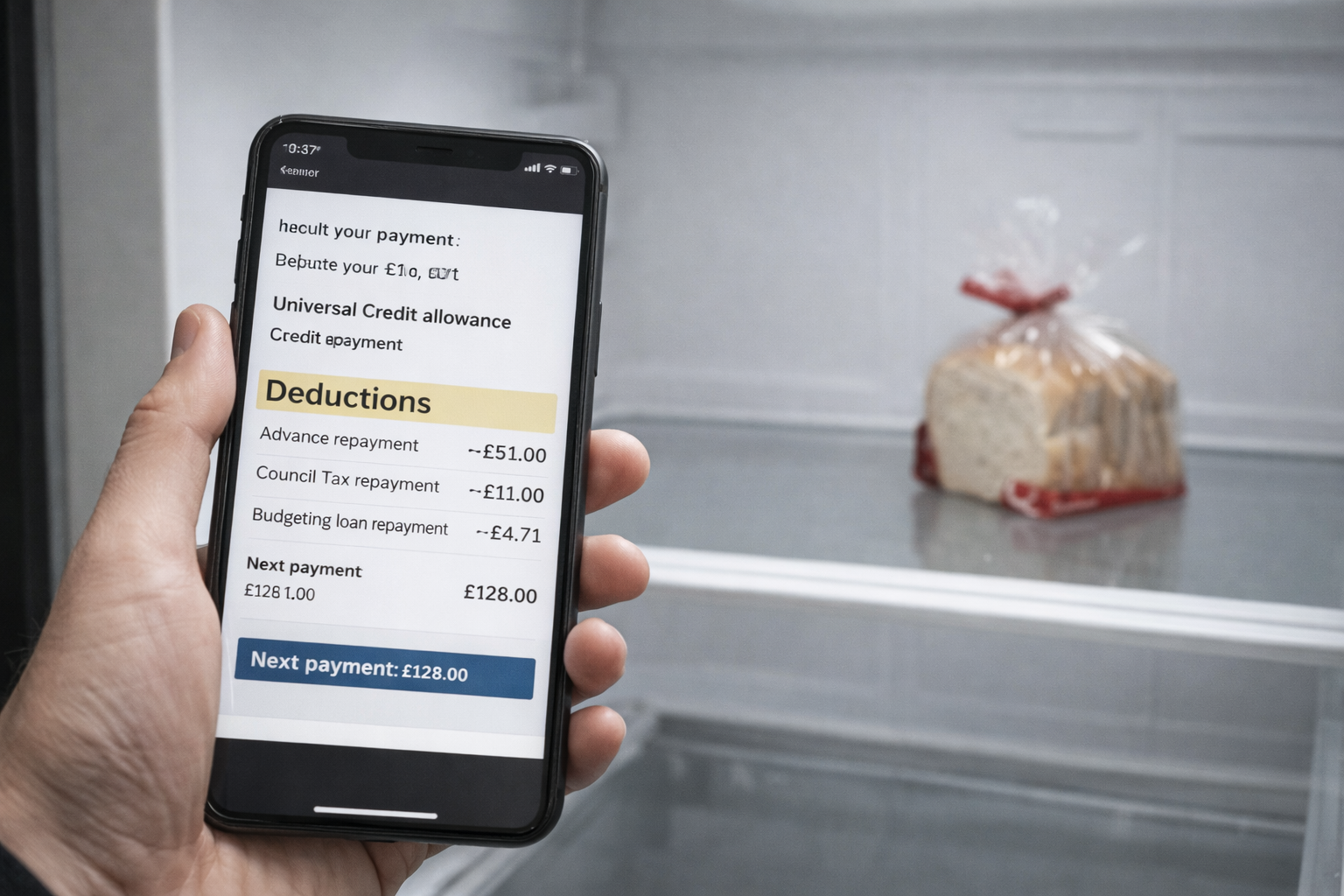
Universal Credit can be reduced by deductions for things like advance repayments and certain priority debts. For a household already running tight, a smaller payment does not just mean “less spare money.” It can mean a sudden gap that food absorbs first.
What deductions do to real budgets
When someone’s payment drops, the problem is not only the amount. It’s the predictability.
Households on low incomes tend to run on:
- weekly food plans
- low or no savings buffer
- prepayment energy top-ups
- small but fixed transport costs
- school and childcare routines
A deduction is a disruption to the entire system. People do not “cut back” on rent. They cut back on food, social contact, travel, and heat. Then they cut back again.
From April 2025, the general cap for debt deductions was reduced to 15% of the Universal Credit standard allowance. That helps, but it still leaves households feeling the hit, especially when multiple deductions stack up or when the household already has arrears pressure.
Why this turns into a hunger problem fast
Food is the flexible line on the budget. That is the brutal reality.
When money is short:
- people buy fewer fresh items because waste is too risky
- people skip meals so children can eat
- people rely on cheap calories that do not last
- people avoid cooking if energy is expensive
- people drift into crisis support later than they should
By the time someone reaches a food bank, a lot has already happened. Deductions speed that slide.
The hidden harm: anxiety, shame, and constant triage
Deductions also create psychological pressure. People experience it as being punished twice: once by the crisis that forced the advance or debt, and again by the repayment squeezing the present.
That pressure shows up as:
- reduced decision capacity
- avoidance of letters and calls
- missed appointments
- withdrawal from support systems
- increased conflict in households
Hunger is not only physical. It is a constant mental load.
What a better response looks like
A stronger system response recognises that deductions are often a “cash-first emergency” moment.
The support that prevents a deeper crisis tends to be:
- flexible cash-first help for essentials
- rapid referrals to debt and welfare advice
- small crisis grants that stop the next missed payment
- local community support that reduces isolation
How Feed & Flow approaches this
Feed & Flow exists to strengthen local support systems so that a cash flow shock does not become a hunger crisis.
In practice, that means backing projects that can:
- provide flexible support in the week the payment drops
- connect people to advice quickly
- offer dignity-first help that reduces panic behaviour
- stabilise households before hunger becomes routine
Food support works best when it prevents the next crisis, not only when it responds to the last one.