
The Two-Child Limit Ending: What Changes, What Doesn’t, and Why Hunger Doesn’t Wait
// NO DESCRIPTION DATA
Policy changes
Policy changes matter, but hunger does not pause while politics catches up.
The UK’s two-child limit has shaped family budgets for years by restricting the child element of certain benefits to the first two children in a household (with limited exceptions). The government has published how the policy works and how it has been applied.
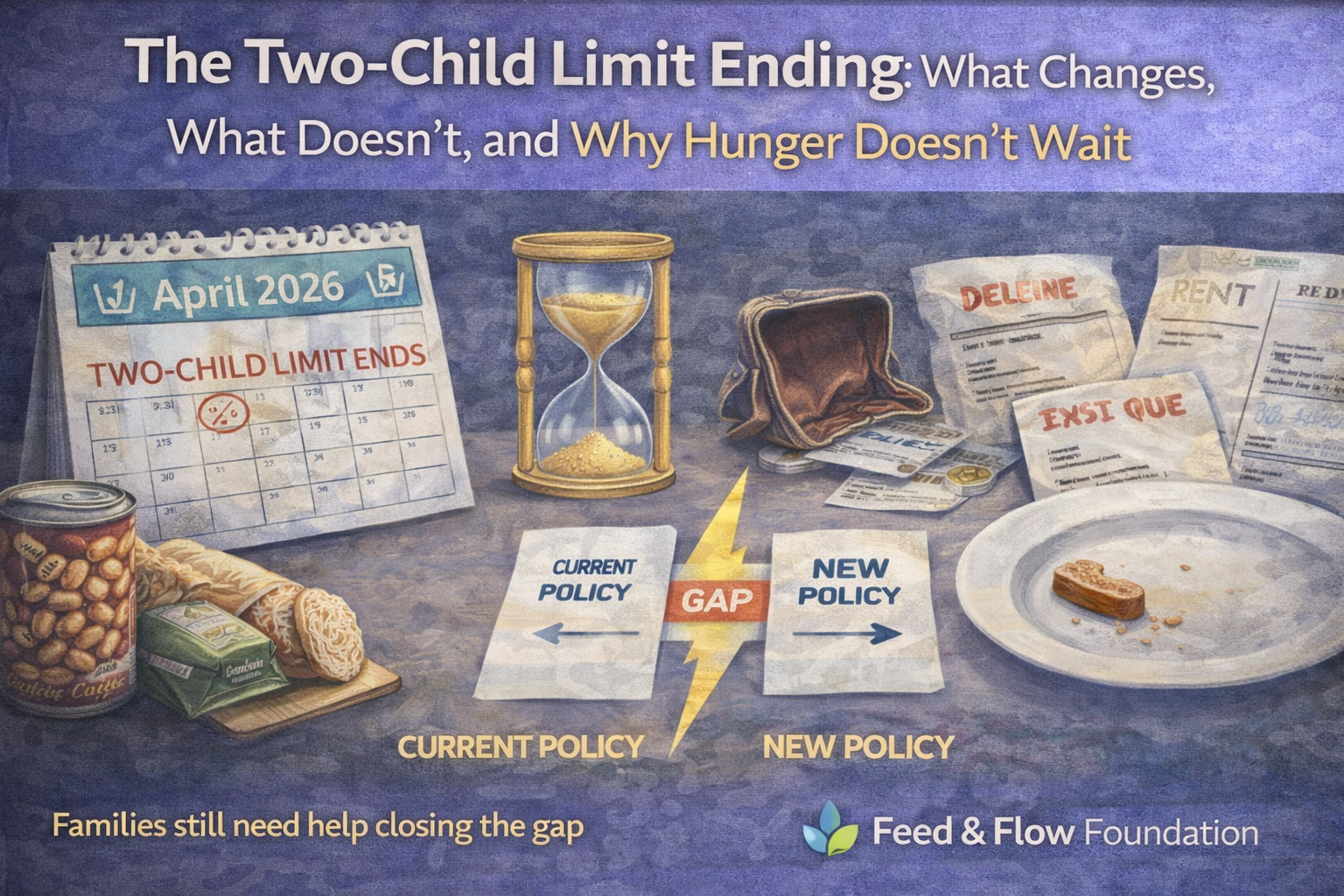
Now, official budget material indicates the two-child limit is set to end from April 2026.
That is significant. It is not instant.
What the two-child limit did in real life
For many families, the policy was not an abstract debate. It was a weekly reality:
- food shops shrinking
- reliance on cheap calories
- more frequent crisis points
- parents protecting kids by eating less
It also hit families who did not “choose” a larger household in neat policy terms, including complex situations involving disability, care, and changed circumstances.
Disability and family support organisations have highlighted how families with disabled children can face especially harsh financial pressures under benefit restrictions.
Ending the policy helps, but the transition period still bites
Even if the policy ends in April 2026, households still live through:
- winter pressures
- debt already built up
- rent increases
- high food prices that do not “rewind”
- ongoing deductions and repayment plans
Feed & Flow’s lens here is simple: policy shifts are important, but families still need bridging support while those shifts work through the system.
Why “child hunger” is not only a school issue
Families feel hunger most at home:
- weekends
- evenings
- school holidays
- sudden costs, birthdays, broken appliances, travel
That means food support needs to be year-round, coordinated, and locally accessible.
What Feed & Flow focuses on during policy change
When rules shift, families need clarity and stability, not new confusion.
Feed & Flow backs:
- local projects that can respond fast to demand spikes
- advice-linked support so families understand entitlements and exceptions
- cash-first interventions that prevent crisis escalation
- dignity-first support that keeps parents in control of what their children eat
Policy can change a household’s long-term trajectory. But families still need food this week.