
Time Poverty Is a Hunger Issue: When Life Leaves No Time to Shop, Cook or Eat
// NO DESCRIPTION DATA
Hunger
People often talk about hunger as if it starts and ends with money.
Money matters. Obviously. But there is another pressure that gets ignored all the time: time.
A household can have food in theory and still struggle in practice if the adults inside it are stretched so thin that shopping, cooking, planning and sitting down to eat all become harder than they sound. That is what time poverty looks like. It is one of the quiet engines behind food insecurity in the UK.
Hunger Is Not Always About an Empty Cupboard
For many families, the problem is not that they care less about food. It is that their days are built in a way that keeps food support just out of reach.
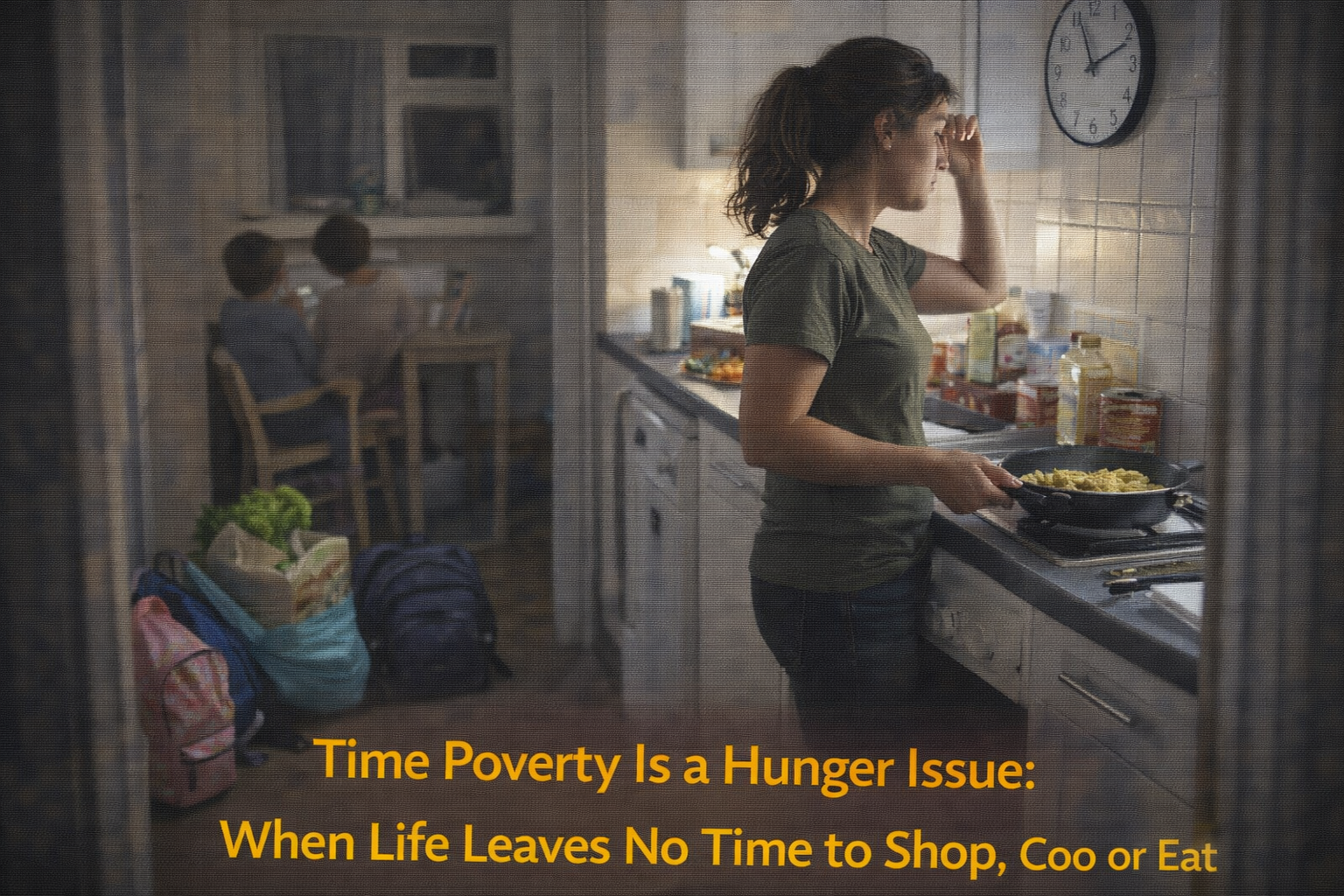
A parent finishes work late, collects the kids, deals with transport delays, sorts homework, answers messages from school, and tries to manage bills before bed. By that point, the meal that looked realistic at 10am is gone. The easier option wins. Sometimes that means takeaways. Sometimes it means toast. Sometimes it means the adult skips dinner so the children can eat first.
This is one reason hunger can exist in working households without looking dramatic from the outside. The kitchen is there. The supermarket exists. The family may even have bought food a few days earlier. But the time needed to turn that into regular, nourishing meals keeps collapsing.
Cheap Food Often Demands More Time
A lot of the lowest-cost food options require planning, prep, storage and energy.
They assume someone has time to compare prices, travel to the cheaper shop, carry bags home, batch cook, freeze portions and repeat the cycle every week. For households under pressure, that version of “cheap” is not always realistic.
That is why hunger is not solved by saying people should cook from scratch more often. That advice might sound sensible, but it ignores how modern low-income life actually works. Long shifts, unstable hours, caring responsibilities and admin overload all eat into the time required to feed a household well.
Good Food Support Has To Respect Real Schedules
This matters for charities too.
If food support only works during narrow opening hours, or assumes people can stand in line for long periods, or expects families to travel across town in the middle of the day, it can miss the people who need it most. Help that looks available on paper can still be out of reach in real life.
That is why Feed & Flow sees hunger as more than a food supply problem. It is also an access problem. The question is not only “Is food there?” It is “Can people reach it, use it, and build it into lives that are already overstretched?”
Time Is Part of the Hunger Story
We should stop treating time poverty as a side issue.
When life leaves no room to shop properly, cook properly or eat properly, food insecurity grows in the gaps. Families do not need judgement. They need support designed for the way people actually live.
Because hunger is not always loud. Sometimes it looks like a full calendar, a tired parent, and one more meal that never quite happens.