
The Freezer Gap: Why Lack of Freezer Space Makes Food More Expensive
// NO DESCRIPTION DATA
Bulk Buy
“Buy in bulk” is one of the most common pieces of money-saving advice. It often assumes a hidden luxury: storage space, especially freezer space.
For many low-income households, freezer space is limited, shared, or unreliable. Some have tiny fridge-freezers. Some have broken freezer drawers. Some are in temporary or overcrowded housing where storing food safely is a daily challenge. Without freezer capacity, one of the main ways people reduce food costs becomes inaccessible.
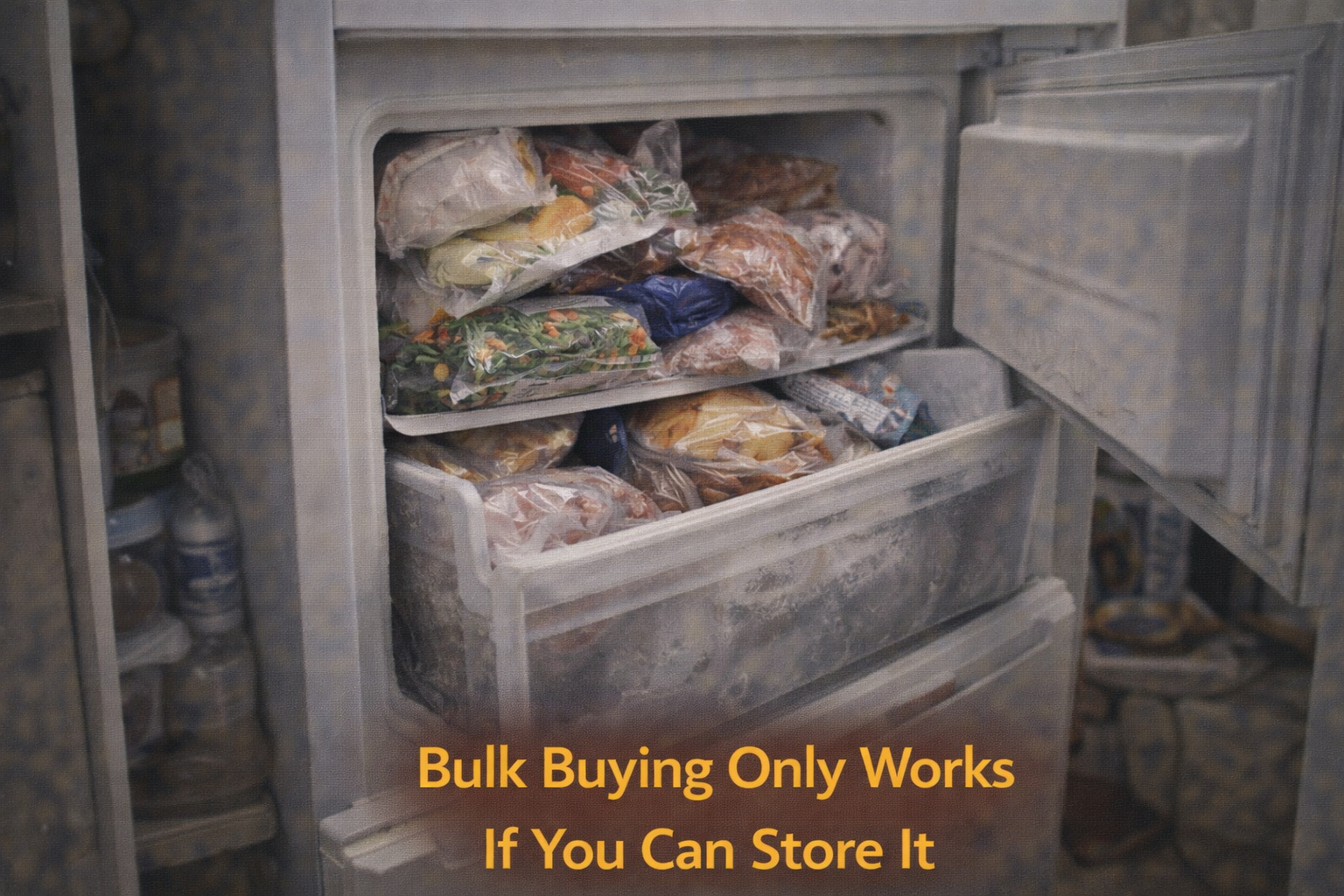
Bulk Buying Only Works If You Can Store It
Frozen vegetables, batch-cooked meals, reduced items that need freezing, family packs, multi-buys. These are all strategies that reduce cost per portion. But they require storage.
If a household can only store a few days of food at a time, they shop more often, buy smaller packs, and lose access to deals that reward planning. That is the poverty premium, but built into the kitchen.
Reduced Food Becomes Risky
Near-date food can be a lifeline when budgets are tight. But if you can’t freeze it, it becomes a gamble. Households either avoid it or waste it. Either way, the savings disappear.
This is a quiet driver of food insecurity. It’s not always about income. It’s about whether a household can convert low-cost opportunities into stable meals.
Storage Is Part of Food Security
Food support and policy often focus on calories and parcels, but storage is the infrastructure that makes food usable. A lack of freezer space reduces resilience. It makes households more vulnerable to timing shocks, pay delays, and price spikes because they can’t build a buffer.
Feed & Flow Can Treat Storage as a Real Barrier
Recognising the freezer gap changes how support is delivered. It affects what types of food are appropriate, how often support should be provided, and whether households need additional practical help to make food stability possible.
A freezer isn’t a luxury when your budget is fragile. It’s a stability tool.