
Shared Kitchens, Shared Fridges, Shared Stress: How Crowded Housing Makes Food Insecurity Worse
// NO DESCRIPTION DATA
Food Insecurity
Food insecurity is often measured by money, but housing conditions shape it just as much as income does.
One of the least discussed problems is what happens when households do not control their own kitchen space. Shared houses, temporary stays, overcrowded homes, and unstable living arrangements can turn ordinary food planning into a daily hassle.
When storage, privacy, and routine are all limited, hunger gets harder to prevent.
Cheap Food Assumes Stable Space
A lot of the advice given to low-income households quietly assumes one thing: control.
Control of the fridge. Control of the cupboard. Control of meal times. Control of what gets stored, cooked, left for later, or kept safe. But many people do not have that.
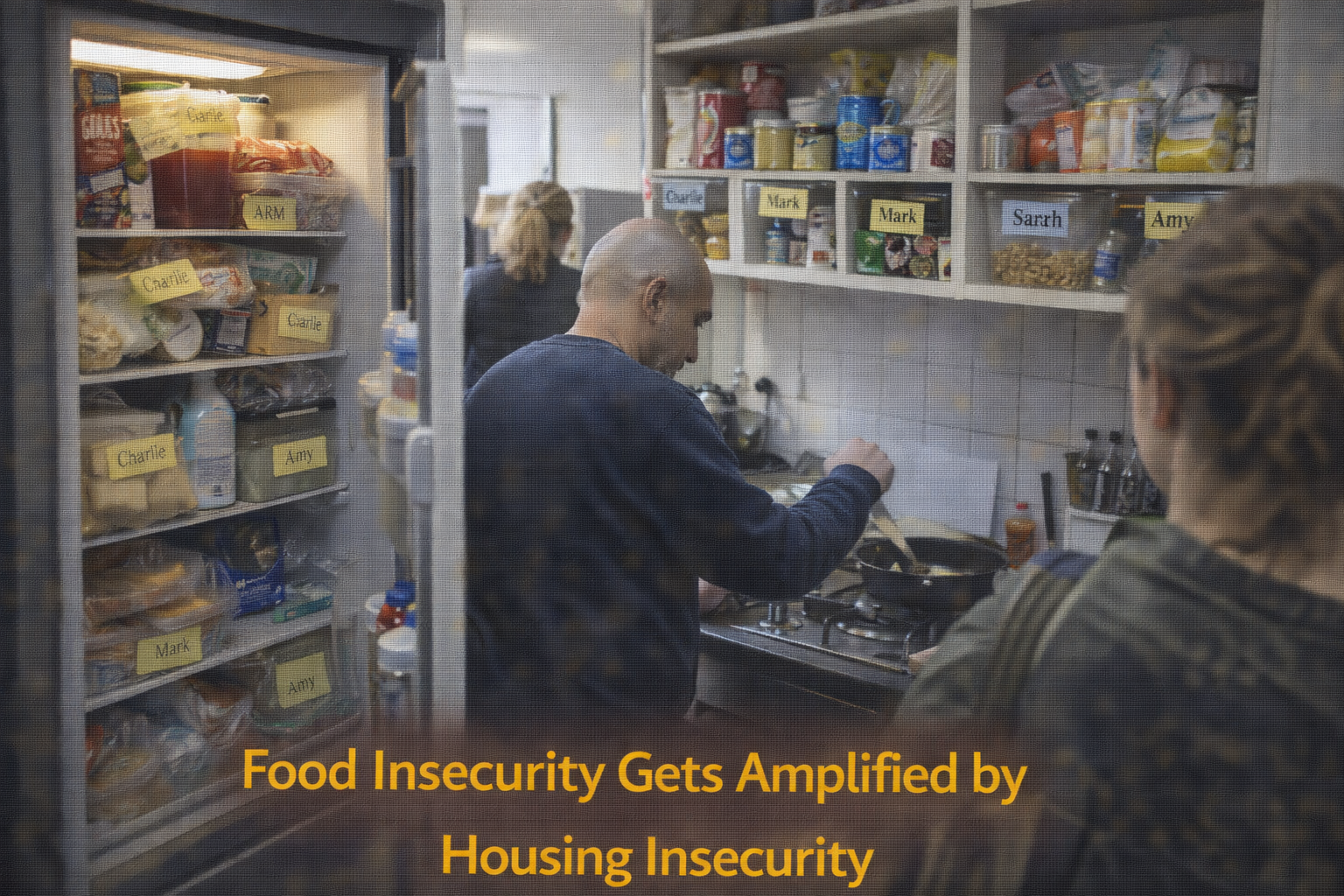
In shared kitchens, fridge space is tight, food gets moved, labelled, borrowed, lost, or thrown out. Cooking can feel awkward, competitive, or stressful. Peak times become crowded. Basic planning becomes harder. That pushes people towards food that is fast, sealed, personal, and easy to keep in one corner of a room.
That is often worse value and worse nutrition.
Food Insecurity Gets Amplified by Housing Insecurity
This matters because stable eating depends on stable space.
If someone does not feel comfortable using the kitchen, they will use it less. If they cannot store enough food safely, they shop smaller and more often. If they worry things will disappear, they stop buying what needs prep and start buying what needs no trust in the environment.
This is how housing pressure quietly worsens food pressure. The issue is not only whether someone can afford food. It is whether their living setup allows food to work in the first place.
Feed & Flow Should See the Full Environment
Food support works better when it sees the reality behind the shopping list.
A person in crowded or shared housing may need a different kind of support from someone in a stable home with a full kitchen and freezer. The same parcel or advice will not land the same way in both places. Housing conditions shape what is actually usable.
Feed & Flow should keep that practical lens. Hunger is not just about income, and food support is not just about supply. The environment around the food matters.
Because if the kitchen itself is a source of stress, food insecurity gets harder to solve one meal at a time.