
Self-Disconnection Means No Dinner: When the Meter Runs Out, Cooking Stops
// NO DESCRIPTION DATA
Food insecurity is not only “no money for food”
Sometimes it is: no power to cook it.
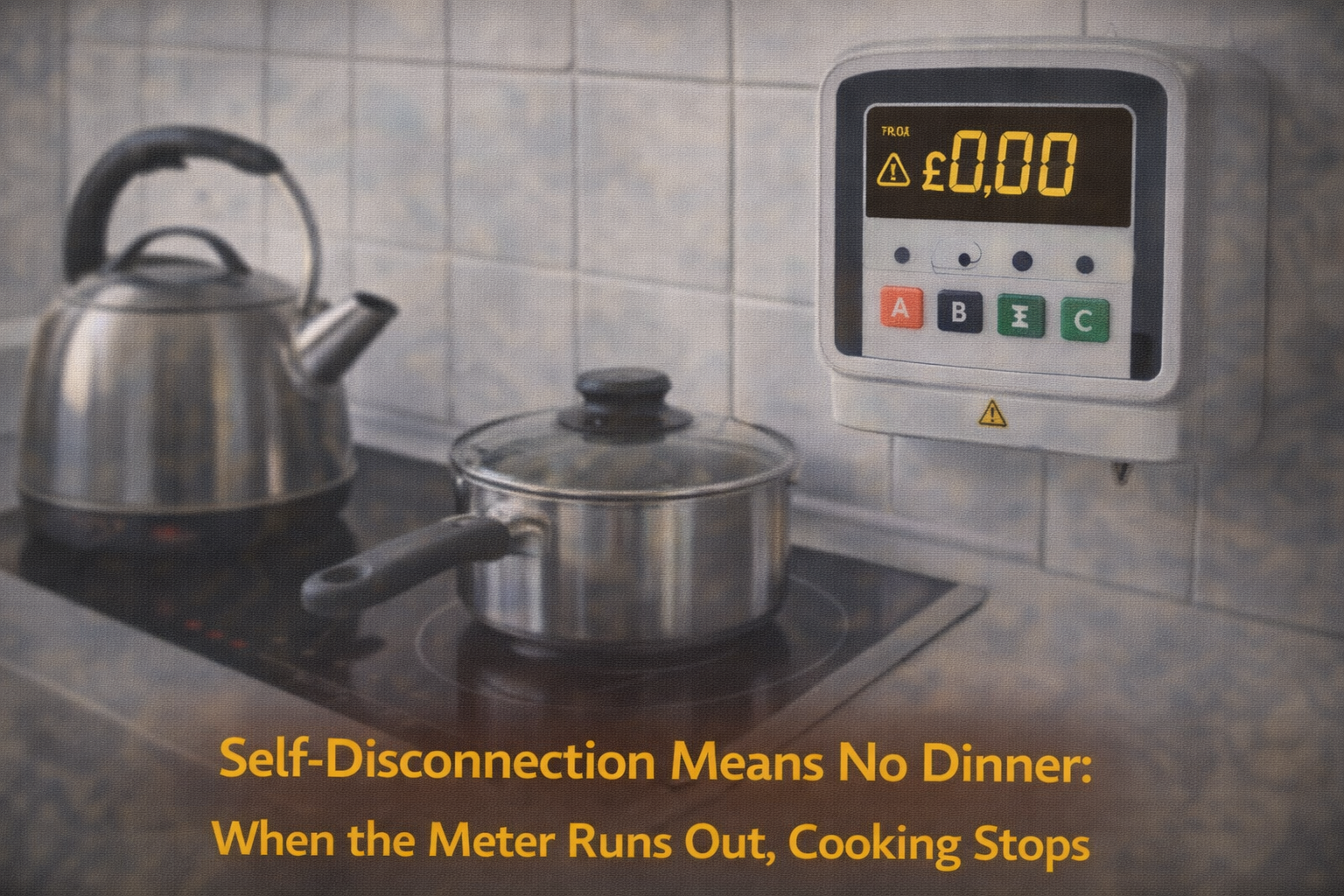
When households are on prepayment meters, running out of credit can mean the home effectively switches off. That can kill:
- hot meals
- safe food storage
- the ability to make formula, pasta, rice, soup
- basic hygiene
Ofgem has repeatedly treated debt, disconnection risk, and protections for vulnerable customers as an active regulatory problem.
Self-disconnection is a real, measured phenomenon
Self-disconnection is when energy supply stops because credit runs out (or the household stops topping up). Industry reporting has flagged sharp rises in self-disconnection levels during the cost-of-living crisis.
Even older regulatory work explicitly tracks self-disconnection and its harms.
The “cooking cutoff” is why hunger accelerates
Once cooking becomes unreliable, households fall into expensive survival patterns:
- cold snacks instead of meals
- takeaway debt because “at least it’s hot”
- kettles and microwaves replacing proper food
- wasted food from spoilage
This is how food debt grows without people “spending on luxuries”.
What food projects can do without pretending to be energy providers
This is where food support becomes resilience support:
- provide ready-to-eat options that do not require cooking
- offer microwave access or partnerships with warm community spaces
- stock “meter-friendly” foods: tins with ring pulls, shelf-stable items, minimal prep meals
- signpost to energy advice and emergency credit routes
If Feed & Flow is funding local delivery points, those sites can be designed for dignity and practical reality, not a fantasy where everyone has a working kitchen every day.