
Schools, GPs And Food Projects: How Feed & Flow Helps Join The Dots
// NO DESCRIPTION DATA
Food insecurity
Food insecurity rarely shows up first at a food bank door.
It appears in classrooms, GP surgeries, advice centres and housing offices long before someone reaches a queue.
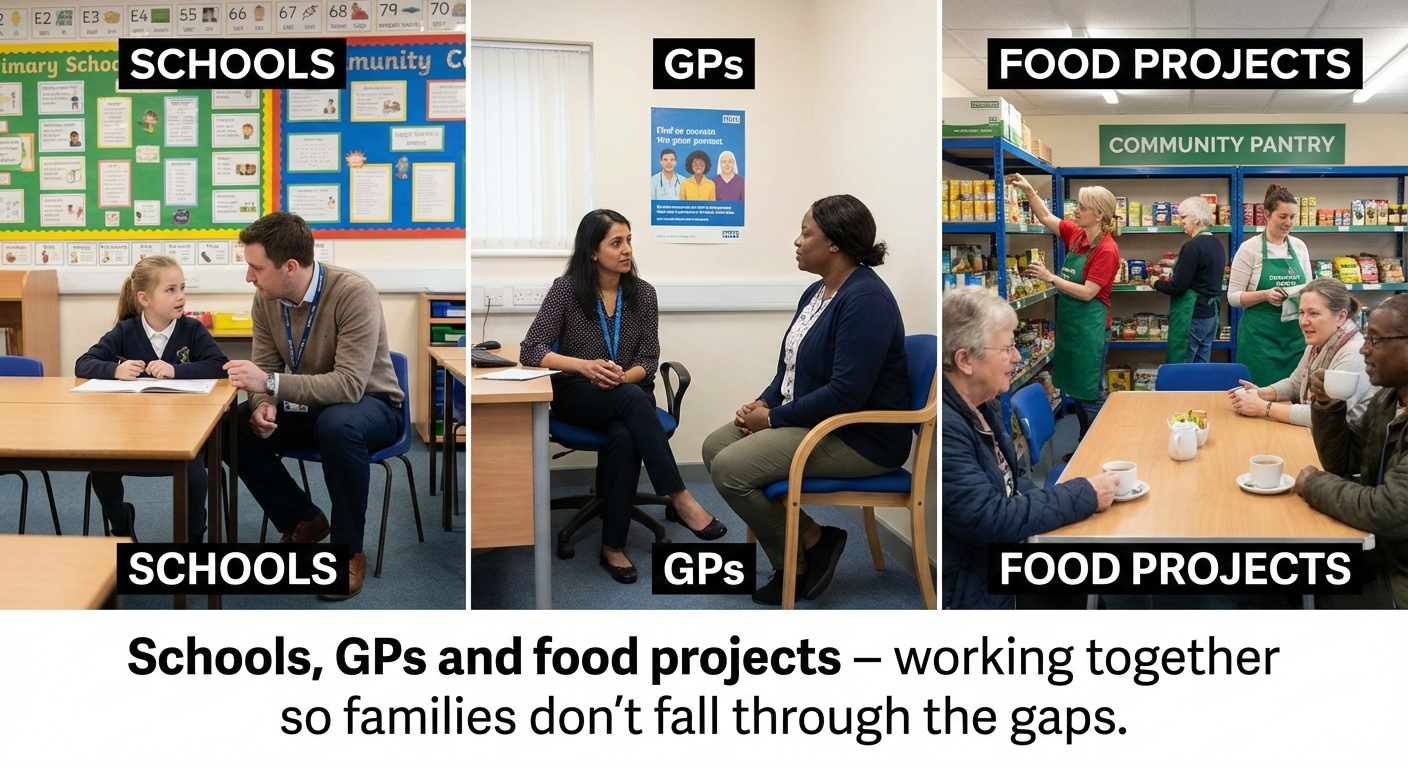
Feed & Flow Foundation wants food projects to be part of a joined-up local system, not an isolated service at the edge.
Why schools are often the first to notice
Teachers and school staff see patterns other services miss:
- Children arriving tired or unable to concentrate
- Pupils mentioning empty cupboards or skipped meals
- Lunch money running out too early in the week
- Higher absence during times of financial stress
Schools respond in many ways – breakfast clubs, snack baskets, hardship funds, clothing swaps. But they cannot do everything alone.
Feed & Flow looks for food projects that:
- Have clear, respectful links with local schools
- Accept referrals in ways that protect family dignity
- Provide support that works around school hours and holidays
- Offer food that suits children as well as adults
Where possible, the foundation supports projects that combine food with spaces for homework, play or quiet time, recognising that hunger and learning are closely connected.
GPs, health services and social prescribing
Health professionals are increasingly aware of the link between food and physical or mental health.
GPs describe seeing:
- Worsening long-term conditions where diet is affected by low income
- Parents cutting back on their own food to feed children first
- Patients whose anxiety is driven by financial strain
Social prescribing – where GPs link patients to community services rather than just medical treatment – is one way to respond.
Feed & Flow encourages projects to:
- Build relationships with local GP surgeries, health visitors and mental health teams
- Make referral routes simple and clear
- Feed back anonymised information on demand pressures
This does not turn food projects into medical services. It recognises that stable access to food underpins health.
Avoiding stigma in referrals
Joining up systems can go wrong if referrals feel controlling or shaming.
Feed & Flow supports approaches where:
- People can self-refer as well as being signposted
- Nobody is forced to discuss personal finances in public
- Services explain clearly what information is shared and why
- Families are not made to “prove” their need repeatedly
The aim is for schools and GPs to become trusted bridges, not gatekeepers.
Building local partnerships that last
Partnership work takes time and energy. Feed & Flow understands that.
When reviewing applications, the foundation looks for signs that projects:
- Attend local network meetings where schools, health services and charities share information
- Have identified one or two realistic partnership priorities, rather than trying to do everything
- Involve people with lived experience in designing referral systems
Funding may help projects:
- Employ coordination staff
- Improve data handling and privacy systems
- Run joint information events with schools and surgeries
Food support works best when it is part of a wider safety net that notices problems early and responds kindly.