
School Meal Debt Is a Hunger Signal, Not “Bad Parenting”
// NO DESCRIPTION DATA
School meal Debt
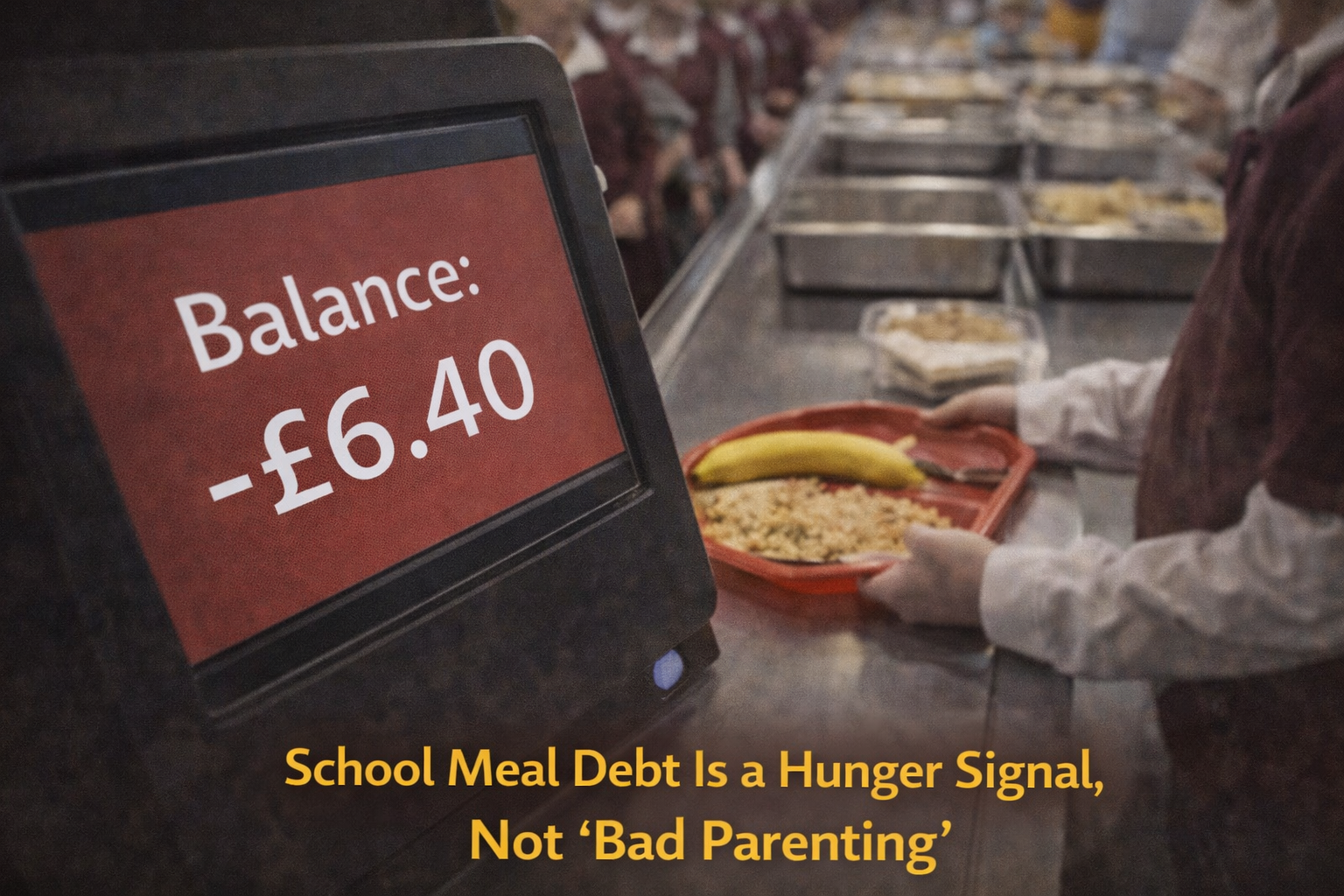
School meal debt sounds like admin. In real life, it is a child going through the day hungry because a system decided a negative balance should be handled like a missed bill.
School meal debt is created by the system design
When meals are means-tested, families move in and out of eligibility. Earnings shift. Forms get missed. Deadlines get blown. Kids still need lunch, every day.
Reports have highlighted how means-tested school meals create debt and stress for families, and add administrative burden for schools.
“Just pay it” is not a plan when budgets are already broken
If a household is already choosing between heat, rent, travel, and food, a school meal bill is not a simple add-on. It competes directly with groceries.
Newer charity research has also flagged school meal debt as widespread and linked to hardship, pushing the argument that it should be treated as a poverty indicator, not a discipline issue.
The worst part is what kids learn from it
Debt systems in schools can create:
- visible embarrassment at the till
- fear of taking a meal
- avoidance, skipping lunch
- a quiet drop in concentration and behaviour
That is not “accountability.” That is stigma training.
What Feed & Flow can realistically do about it
Feed & Flow is built to push resources to frontline support structures including school breakfast clubs and community provision, funded through a pipeline from corporate ad revenue.
For school hunger, the practical play is:
- support universal provision models where possible
- fund wraparound support where breakfast helps but does not solve lunch
- back schools with no-shame approaches while policy catches up
If a child is in debt for lunch, the household is already in distress. Treating it as “non-payment” is how you turn admin into hunger.