
One Portion at School Helps, But It Doesn’t Fix the Nutrition Gap
// NO DESCRIPTION DATA
The scheme is real and it has a clear aim
England’s School Fruit & Vegetable Scheme is designed to provide one portion of fruit or veg per school day to children in Reception and Key Stage 1, supporting nutrition and normalising healthier eating.
One portion is not the same as adequate access
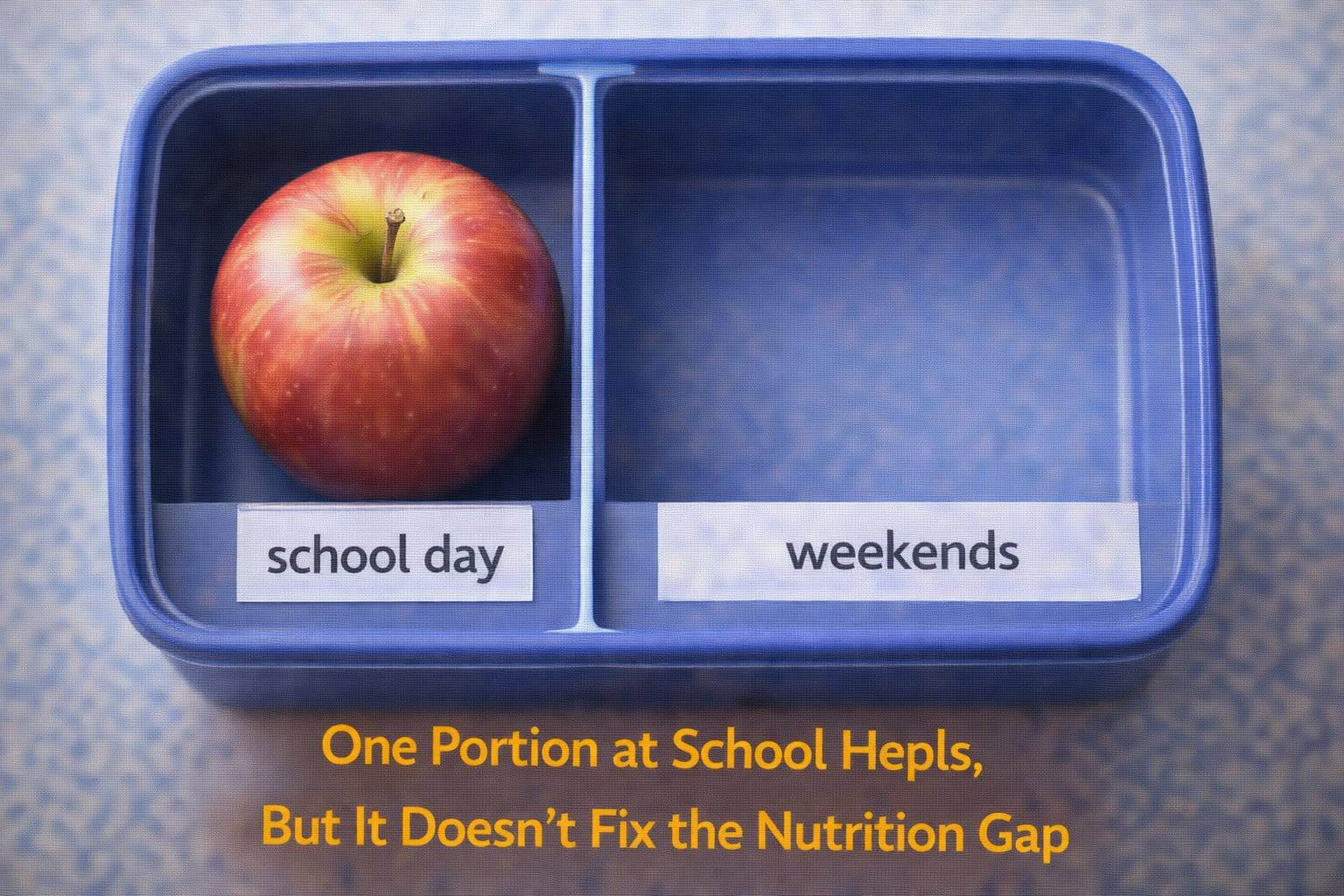
A portion a day is helpful. It is not a solution to household food insecurity.
The hardest part of the week for low-income households is often not lunchtime at school. It’s:
- The weekend
- The end of the month
- School holidays
- Morning food before the school run
Why the “nutrition gap” matters
Food insecurity doesn’t always show up as “no calories.” It often shows up as low fruit/veg intake and reliance on cheap, ultra-processed foods because that’s what budgets can stretch to.
A scheme that improves weekday nutrition still leaves families exposed to the rest of the week.
Where community support matters most
This is where breakfast clubs, pantries, and community kitchens do something schools can’t:
- Smooth the gaps that happen outside school hours
- Provide dignity and routine
- Reduce pressure on parents who are already juggling rent, childcare, and energy bills
How Feed & Flow fits the gap
Feed & Flow’s focus areas (food banks/pantries, school breakfast clubs, community kitchens) map neatly onto the “missing time” that school-based schemes can’t cover.
The impact isn’t theoretical. It’s logistical: covering the hours when hunger actually hits.