
Price Volatility Punishes the Poor: “Dynamic Pricing” Logic Collides With Household Budgeting
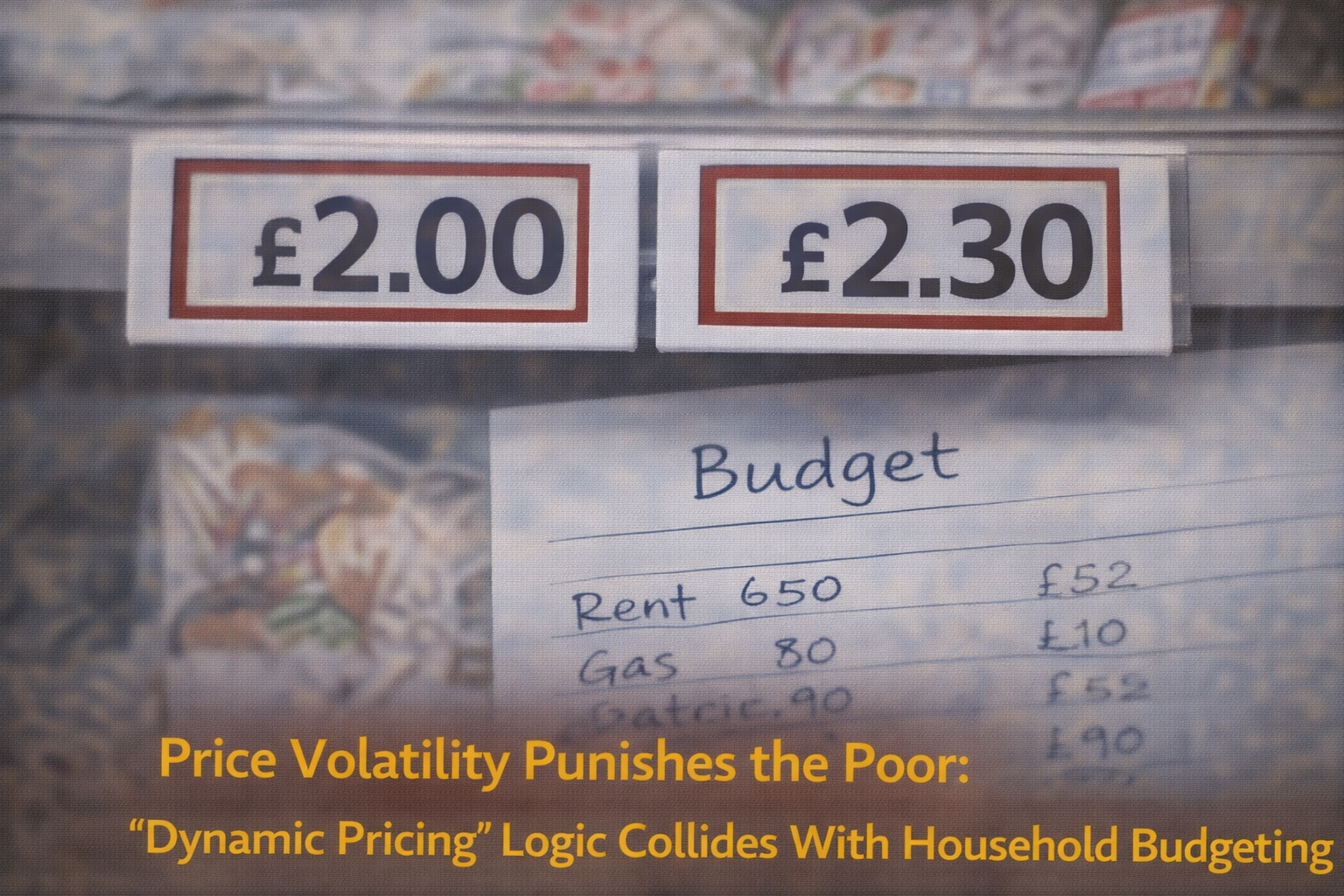
// NO DESCRIPTION DATA
Food insecurity is a planning failure, not only a food failure
When money is tight, households rely on predictability:
- known prices
- known totals
- repeating baskets
- fixed budgets
Instability breaks planning. Planning breaks before food does.
“Dynamic pricing” is under active scrutiny in the UK
The UK competition watchdog has an open project looking at dynamic pricing and what it means for consumers.
The problem is not “prices change”. The problem is transparency, timing, and who carries the risk.
Grocery is not tickets, but the logic is creeping into retail tech
Supermarkets are rolling out electronic shelf labels and faster pricing infrastructure.
That does not automatically mean abusive pricing. It does mean the technical barrier to rapid price movement gets lower.
Why low-income households get hit first
Price volatility and personalised offers create “budget noise”:
- you cannot trust the total until checkout
- unit pricing becomes harder to track
- people over-correct, buying cheaper calories because risk feels lower
This stacks with existing affordability pressure in national food security reporting.
What Feed & Flow can say without accusing anyone
This is not about attacking supermarkets. It is about naming the consumer reality:
- people need stable, transparent pricing to budget
- technology should not shift risk onto households already stretched
- affordability is not solved by “deals”, it is solved by predictable access