
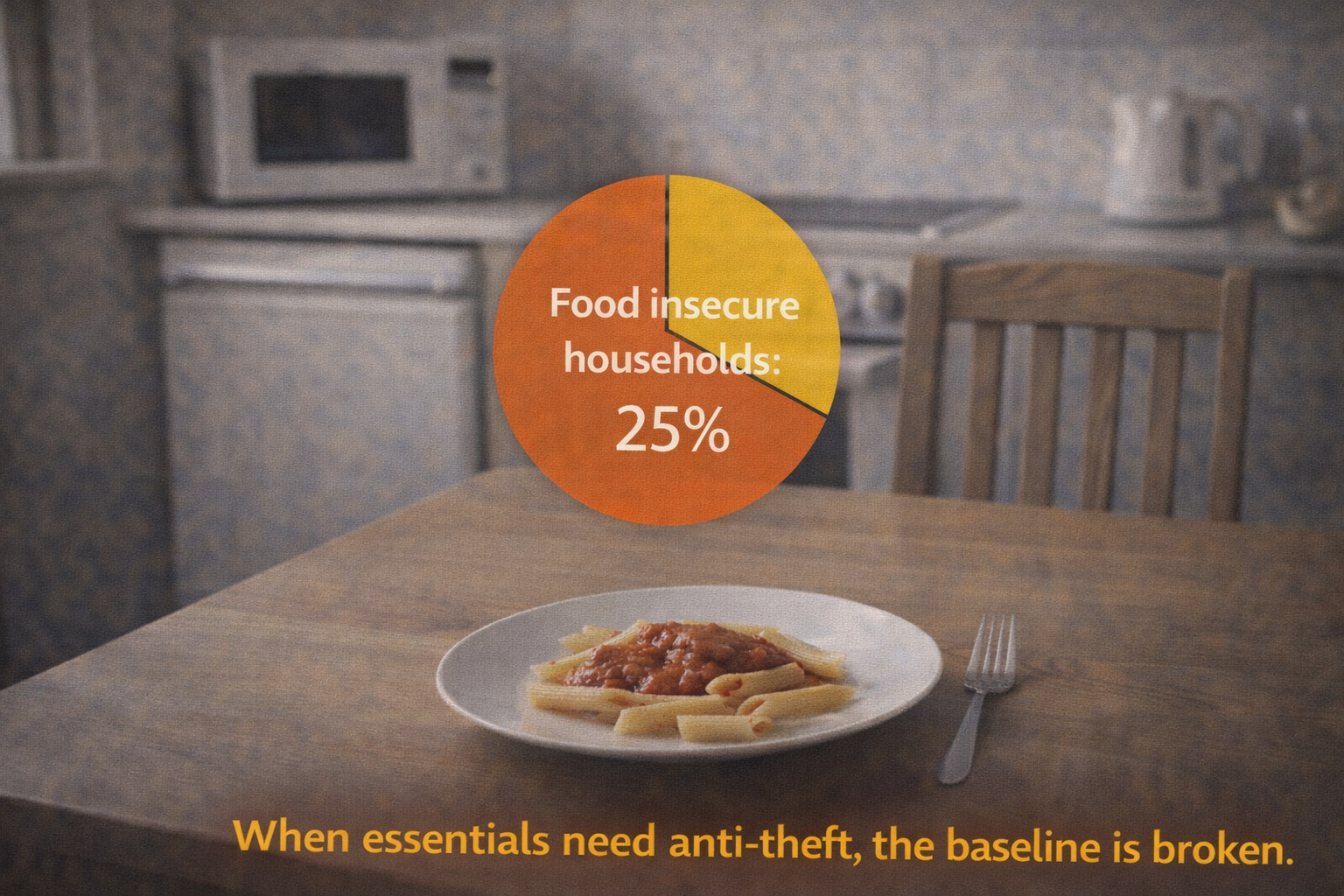
One in Four Households Are Food Insecure: Why the UK Baseline Has Shifted
// NO DESCRIPTION DATA
Food insecurity is no longer rare
The most important thing to understand about hunger in the UK is that it is no longer an edge-case problem. It is a baseline condition for a large share of households.
That changes how we should talk about it.
Food insecurity is more than “no food”
A household can be food insecure without looking like a crisis headline.
It often means:
- buying cheaper calories
- skipping meals
- smaller portions
- constant worry about running out
- eating patterns that damage health over time
This is why people can appear “fine” while living in quiet depletion.
The emergency food system is doing huge volume, but it is still not enough
When emergency food parcels rise into the millions, it signals something structural: the system is compensating for missing stability.
Food banks matter. They are not the end goal. They are a sign the end goal has not been built.
Hunger spreads when support is hard to find
Even when help exists, families often miss it because:
- they don’t know where to go
- they don’t want to be seen
- the process is confusing
- the support is inconsistent
So the real gap is not only supply. It is access, dignity, and continuity.
Where Feed & Flow fits
Feed & Flow’s role is to strengthen the local layer that can provide consistent support, not just one-off rescue. That means backing the practical infrastructure that reduces food insecurity week after week: pantries, kitchens, and school-based provision.