
Hunger Isn’t Random: Why Child Poverty Policy Shapes Who Eats
// NO DESCRIPTION DATA
Hunger
A lot of people picture hunger like it’s caused by sudden misfortune.
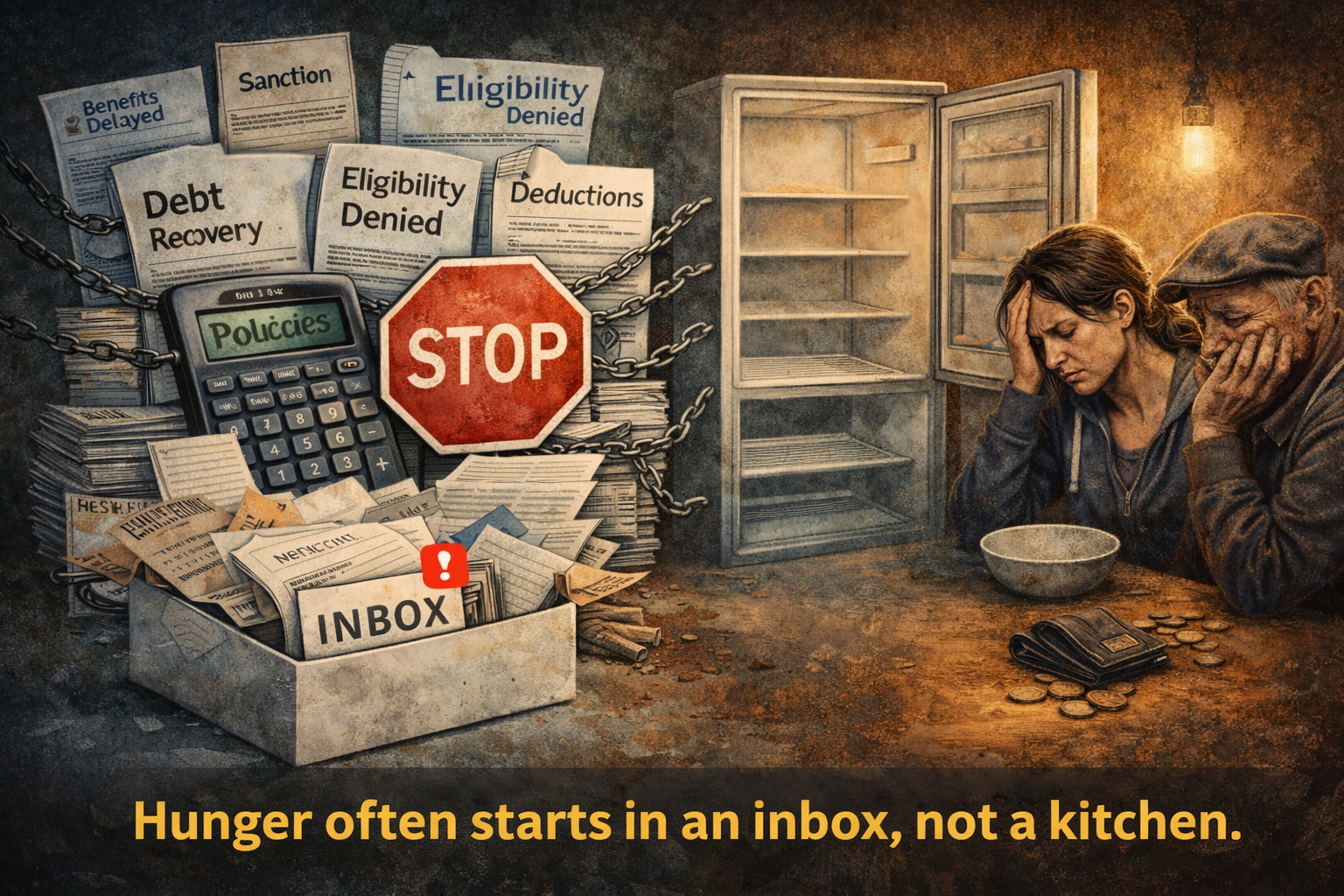
But in the UK, hunger is often engineered by systems:
- eligibility thresholds
- delays
- deductions
- sanctions
- inconsistent local support
That’s why hunger patterns are predictable.
The same households get hit again and again.
Policy creates pressure, and pressure creates hunger
When support is slow, restricted, or inconsistent, hunger becomes the shock absorber.
Recent UK policy discussion has focused on child poverty as a structural issue with proposed interventions around support, costs, and stability.
The point is not politics.
The point is impact: rules determine outcomes.
Why “crisis” is often a paperwork event
Many food crises are not caused by a lack of food in the UK.
They’re caused by:
- money arriving late
- support being reduced
- debt recovery taking priority
- families falling outside criteria
That means hunger often starts in an inbox, not a kitchen.
The Feed & Flow approach
Feed & Flow exists to strengthen the parts of the system that keep families eating:
- projects that reduce emergency spikes
- support that prevents repeat crisis
- local partnerships that close gaps
- dignity-first help that people will actually use
Because hunger doesn’t wait for policy cycles, committee decisions, or “next quarter.”
If families can’t eat today, the system has already failed.