
Housing, Debt And Empty Cupboards: Why Feed & Flow Looks At The Whole Story
// NO DESCRIPTION DATA
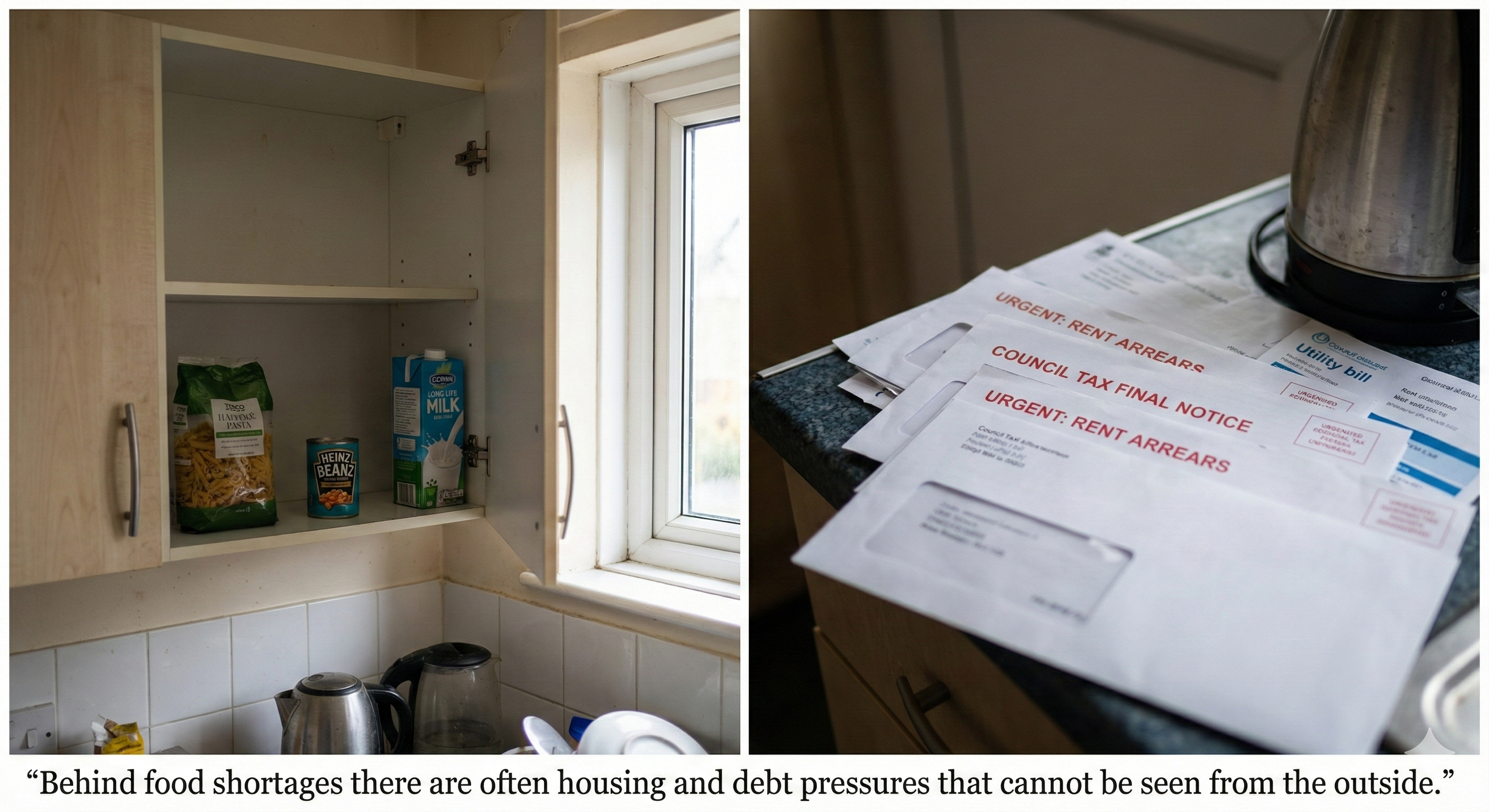
An empty cupboard is rarely just about food.
Behind it there is often a rent increase, a broken boiler, a lost job, a benefit delay or a stack of unpaid letters.
Feed & Flow Foundation funds food support, but it does not pretend food is the only issue. Housing and debt sit right behind many of the stories projects share.
When housing eats the food budget
For many households, rent or mortgage payments take up most of the income.
When those costs rise, food is one of the few flexible areas left.
People describe:
- Paying the landlord first to avoid eviction, then trying to “make the rest work”
- Choosing cheaper, poorer quality food so they can cover the next gas or electric bill
- Moving into smaller or shared spaces where cooking properly is harder
In temporary accommodation, problems multiply:
- Shared or limited kitchen access
- No safe food storage
- Distance from familiar shops and support networks
Feed & Flow’s partners regularly see families whose food crisis is a direct result of housing pressure.
Debt as the silent drain
Debt often runs alongside housing problems:
- Rent arrears
- Old council tax bills
- High-interest credit or catalogues used during past emergencies
- Overdrafts that never quite get cleared
Every payment towards that debt squeezes the food budget further.
Many people using food projects are already in repayment plans or being contacted by multiple creditors. Food becomes the area they cut back on because it feels more controllable than letters through the door.
How Feed & Flow expects projects to respond
Feed & Flow does not expect food projects to solve housing law or complex debt on their own. It does look for signs that they:
- Work in partnership with advice agencies, housing organisations and debt specialists
- Train volunteers to recognise when someone might need more than a food parcel
- Offer calm, private spaces for conversation where appropriate
- Provide information about help in clear, non-judgemental language
Funding decisions take into account whether a project sees food as a doorway to wider support, not an endpoint.
Why “just budgeting better” is not the answer
Public debates about poverty often fall back on personal responsibility: cooking from scratch, planning meals, avoiding takeaways.
Feed & Flow’s experience is that:
- Budgeting skills cannot fix unaffordable rent
- A slow cooker does not solve mould, damp or broken electrics
- Cheap ingredients are no use without proper storage and equipment
By listening to projects and people with lived experience, the foundation keeps its focus on structural realities, not myths.
Food support as breathing space
In situations shaped by housing and debt, food projects can still play a vital role.
They can provide:
- Immediate relief from the worst pressure – knowing the family will eat that week
- Emotional space for people to think and seek advice
- Trusted relationships that make it easier to talk about scary topics like eviction or bailiffs
Feed & Flow wants its grants to create that breathing room, while supporting projects that are connected enough to help people take the next steps.
Empty cupboards are a warning light.
Funding food support is part of responding, but never the whole story.