
Food Support With Dignity: How Feed & Flow Puts Choice And Respect First
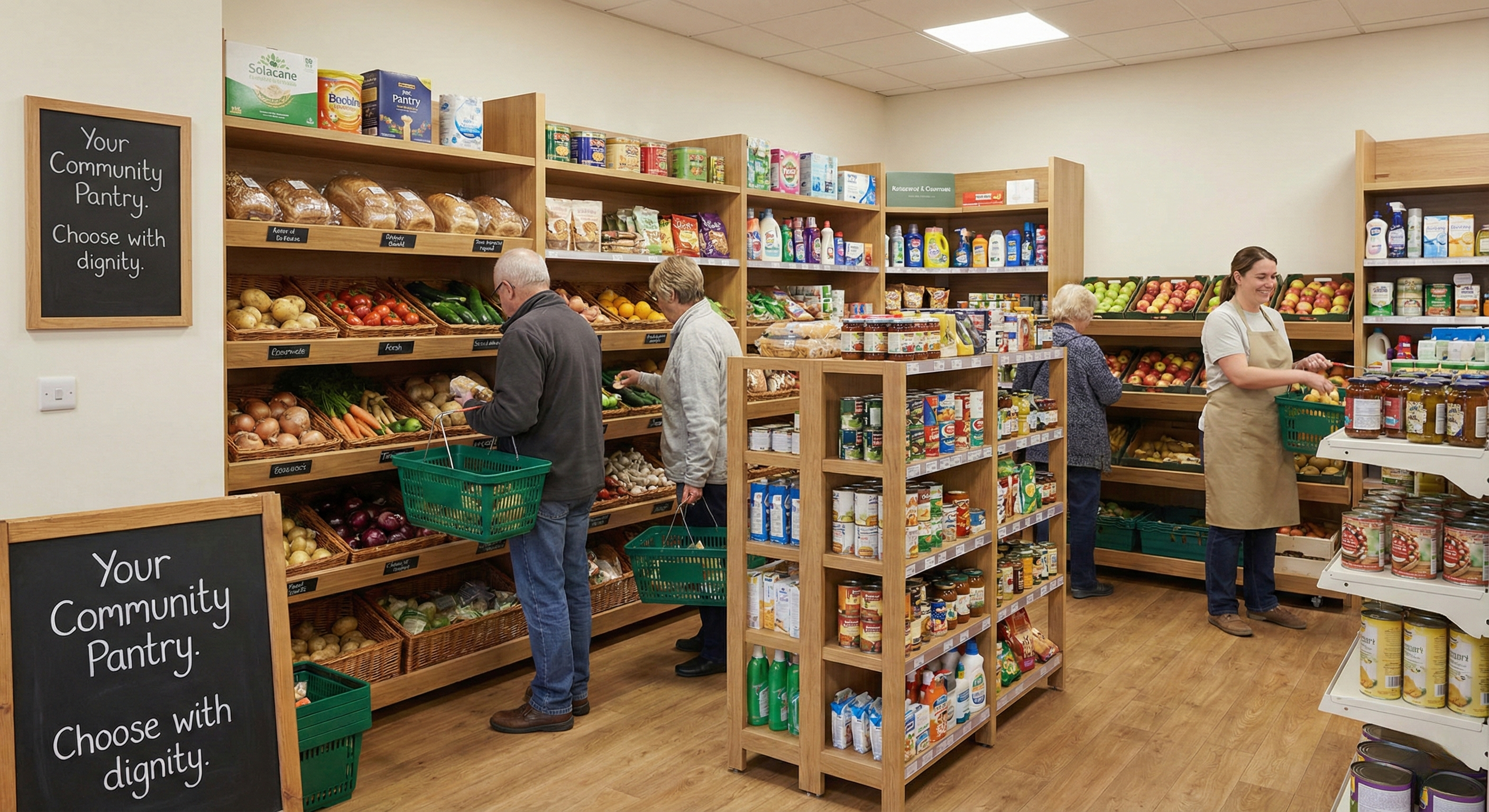
// NO DESCRIPTION DATA
Food support is never just about food.
For the people who use it, it is also about dignity, choice and how they are treated when they ask for help.
In the UK, growing numbers of households are turning to food banks, community kitchens and informal local projects to get by. The food itself matters, but so does the experience:
- Is there any real choice?
- Is the space welcoming or intimidating?
- Do people leave feeling helped or exposed?
Feed & Flow Foundation is being built with a simple principle at its core: food support should protect dignity, not erode it. This post sets out how the charity thinks about dignity in practice and how that will shape the projects it funds across the UK.
Why dignity matters in food support
For many people, asking for food help is a last resort. Before they ever walk through a door, they may already have:
- Cut back on their own meals
- Prioritised children or other family members
- Taken on debt or delayed bills
- Spent weeks or months trying to cope alone
By the time someone arrives at a food bank or community kitchen, they are often carrying:
- Worry about being judged
- Shame about needing help
- Confusion about how the system works
If the environment is harsh, rushed or confusing, it can quietly confirm their fear that they are the problem, rather than the system around them.
Feed & Flow wants the projects it supports to send a different message:
“You deserve to eat. You deserve to be treated with respect while we figure this out together.”
What dignity looks like on the ground
Dignity is a broad idea, but on the ground it comes down to details. Feed & Flow Foundation will look for and encourage approaches such as:
1. Choice, not pre-packed assumptions
Whenever possible, people should be able to:
- Select from a range of foods that fit their circumstances
- Avoid items they cannot use because of culture, religion, allergy or simply practicality
- Have some say in what goes into their bags or onto their plates
Choice-based models are not always easy to run, especially with limited stock. But even small options matter: different types of milk, vegetarian alternatives, child-friendly items, or culturally appropriate staples.
2. Normal, welcoming spaces
The physical environment shapes how people feel. Dignity-friendly spaces aim for:
- Warm, neutral language on signs and leaflets
- Clean, simple layouts that make it easy to see how things work
- Seating and waiting areas that feel like any other community venue
Some projects may use community halls, churches or centres. Others might operate from small shopfronts or school spaces. In each case, the question is the same: does this feel like a place for equals, or a place where people queue to be judged?
3. Respectful, well-supported volunteers
Volunteers are often the first faces people see. Feed & Flow will encourage projects to:
- Provide basic training on confidentiality, boundaries and non-judgement
- Offer clear briefings on how to welcome new visitors
- Support volunteers so they do not burn out or become blunt through exhaustion
A kind, steady conversation at the door can make the difference between someone returning for support when they need it, or disappearing back into quiet struggle.
Trauma-aware, not intrusive
Many people using food services are dealing with more than one challenge at once: debt, housing problems, ill health, caring responsibilities or unsafe relationships. Food projects are not there to fix everything, but they should avoid re-opening wounds.
Feed & Flow Foundation will look for projects that:
- Ask only for information that is genuinely needed
- Explain clearly why any personal details are collected
- Avoid intrusive questioning at the point of access
- Offer signposting to other services without pressure
A trauma-aware approach does not mean avoiding difficult topics entirely. It means letting people share on their terms, at their pace, with clear boundaries.
Protecting privacy and reducing stigma
Food poverty in the UK still carries stigma. Many people go to great lengths to hide that they are struggling. Projects supported by Feed & Flow should help protect privacy by:
- Avoiding public “call-outs” or photography that identifies users
- Allowing discreet access routes where possible
- Being careful with local communication so people are not singled out
Where stories are shared, consent should be real, not assumed. People have a right to receive help without feeling they must also become the face of a campaign.
Supporting volunteers and staff to uphold dignity
Dignity is not automatic. It requires ongoing work. Feed & Flow plans to:
- Encourage partners to reflect regularly on how people experience their services
- Share simple tools and checklists focused on dignity and respect
- Support learning between projects so good ideas spread
Examples might include:
- Anonymous feedback forms
- Listening sessions with regular users
- Simple tweaks to language on forms, signs and online pages
Small changes can make a cumulative difference to how supported people feel.
Why dignity is part of long-term resilience
Food support in the UK is unlikely to disappear overnight. As long as incomes, housing costs and living expenses remain out of balance, many people will need help at some point.
If services are built only around emergency distribution, without attention to dignity, people may:
- Delay seeking help until they are in deeper crisis
- Avoid returning even when they still need support
- Feel disconnected from community life
By putting dignity and choice at the centre, food projects can:
- Become trusted hubs rather than last-resort options
- Link people to other forms of support in a respectful way
- Help rebuild a sense of belonging and mutual care
Feed & Flow Foundation will use its funding, partnerships and public voice to keep this principle clear: how help is given matters as much as what is given.
The role of Feed & Flow
As Feed & Flow grows, it will:
- Include dignity-related criteria in its funding decisions
- Highlight projects that model respectful, choice-based practice
- Share learning from communities on what works and what does not
The aim is simple: when someone in the UK needs food support, they should be able to find it without sacrificing their dignity at the door.
Feed & Flow exists to help make that standard, not a rare exception.