
Food Insecurity Without Food Banks: The People Who Go Hungry Quietly
// NO DESCRIPTION DATA
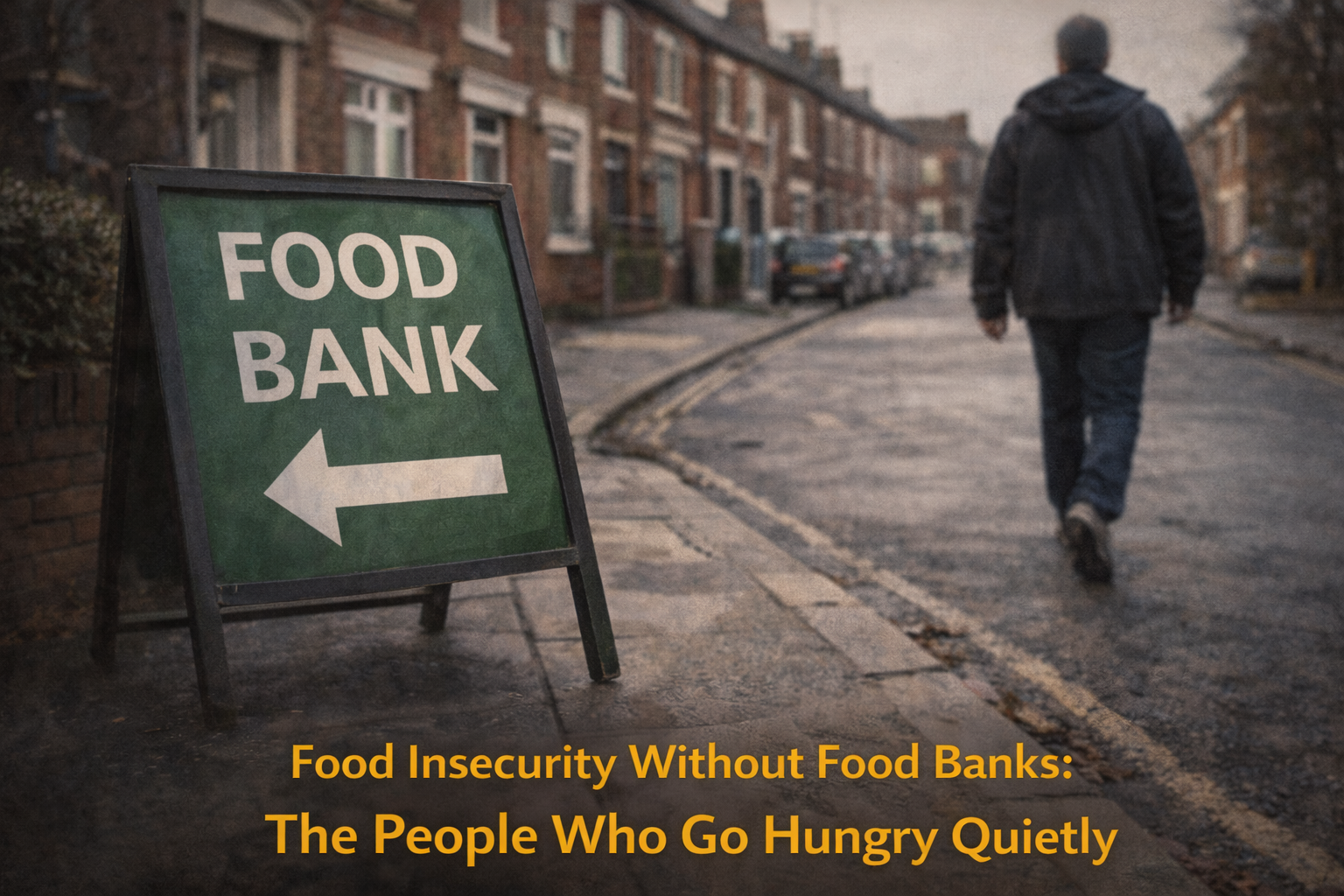
Most hunger never becomes a visible queue
Here’s the gap people miss:
A household can be food insecure and never go to a food bank.
Trussell’s research estimates 16% of UK households experienced food insecurity in 2024 (around 14.1 million people, including 3.8 million children).
But only 7% of people reported using charitable food provision (UK overall).
That difference is millions of people.
Not showing up anywhere.
Why people don’t access food support
The blockers are brutally human:
- shame
- fear of being judged
- fear of “being seen”
- not knowing where to go
- missing referral requirements
- unstable travel costs
- chaotic schedules
Hunger is exhausting.
Systems that require extra admin punish exhausted people.
Hidden hunger is dangerous because it lasts longer
If someone never enters support, they adapt by:
- skipping meals
- buying cheaper calories
- dropping fruit and protein
- prioritising kids only
It becomes normal.
And that’s where long-term health damage builds silently.
What Feed & Flow is built to do differently
Feed & Flow is designed to strengthen the local nodes that already work:
- food banks and pantries
- school breakfast clubs
- community kitchens
But the key move is not “more food”.
It’s more reach:
- reducing friction
- supporting choice-based models
- helping projects stay open during pressure spikes
- supporting referral-light access routes
Why the Glass Box matters here too
People avoid help when they don’t trust it.
Feed & Flow’s commitment is that grants, costs, and impact get published publicly.
Trust is not a slogan.
It’s a system feature.