
The First 1,000 Days: Why Early Years Nutrition Is Where Hunger Leaves the Longest Mark
// NO DESCRIPTION DATA
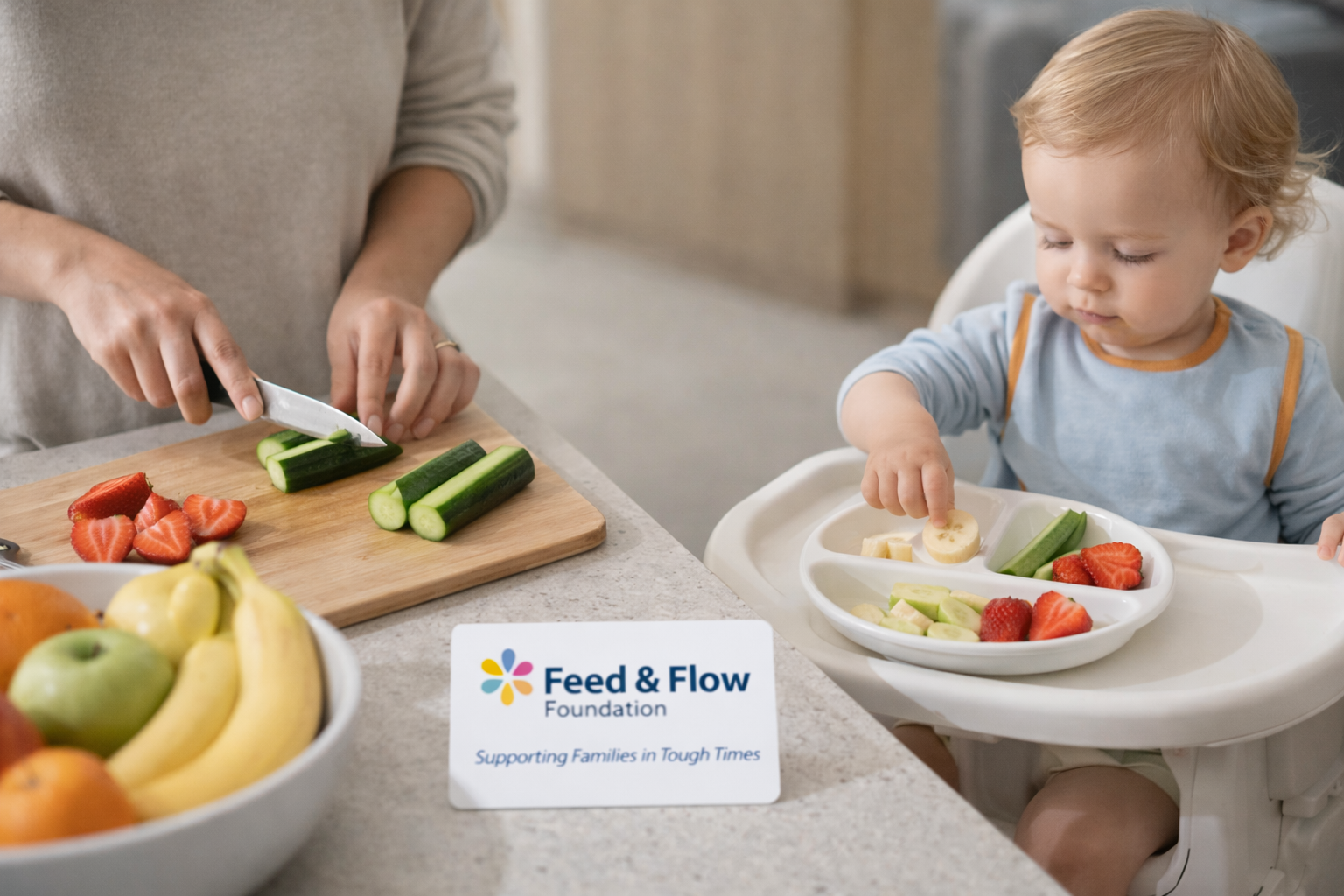
Early years
If you want to understand the real cost of food insecurity, look at early years.
The first 1,000 days, from pregnancy to age two, shape brain development, growth, immunity, and long-term health. When nutrition is unstable in that window, the damage can echo for years.
Feed & Flow supports food projects across the UK. We also focus on where intervention has the highest long-term payoff. Early years nutrition is one of those places.
Early years hunger looks different
For families with babies and toddlers, food insecurity is rarely just “less food.”
It can mean:
- cutting back on healthy options to afford basics
- skipping meals so children can eat
- delaying weaning foods
- relying on cheap ultra-processed items
- struggling to afford the hidden costs of feeding: storage, energy, travel
Parents do not stop caring. They run out of room.
Why early years costs are uniquely harsh
Babies and toddlers have needs that cannot be postponed:
- regular feeding patterns
- consistent nutrition
- safe preparation
- hygiene and storage
A missed meal is not a “tight week.” It is an immediate problem.
And because early years routines are relentless, even small gaps in income or access can trigger crisis quickly.
The Healthy Start gap is a real opportunity
The UK has targeted support like Healthy Start for eligible households, offering help toward healthy food and vitamins. Awareness and uptake are not always where they should be, and many families still struggle to navigate systems under stress.
Feed & Flow works with projects that:
- help families understand what support exists
- reduce stigma around using it
- connect nutrition support to wider help (income maximisation, housing stability, debt advice)
The most effective early years work joins the dots instead of treating feeding as a standalone issue.
Practical support that actually changes outcomes
The strongest early years food projects often include:
- baby-friendly food provision that respects choice
- culturally appropriate weaning foods
- community cooking sessions that are genuinely accessible
- partnerships with health visitors, GPs, nurseries, and family hubs
- small crisis grants or vouchers when feeding costs spike
- help with transport and access to affordable food retail
Early years hunger is solvable when systems are connected.
Why Feed & Flow prioritises early years partners
Early years intervention has compounding returns:
- stronger health outcomes
- better school readiness
- lower long-term support costs
- reduced crisis escalation
Supporting families early is not only compassionate. It is efficient.