
Beyond City Centres: How Feed & Flow Supports Rural And Coastal Communities Facing Food Insecurity
// NO DESCRIPTION DATA
Food insecurity is not just an inner-city problem
When people picture food insecurity in the UK, they often imagine large cities: busy food banks, long queues, crowded estates.
But away from the headlines, rural villages and coastal towns are facing their own version of the same crisis:
- High food prices in small local shops
- Limited or no supermarkets nearby
- Poor public transport links
- Seasonal and insecure work
- Fewer services to fall back on
Feed & Flow Foundation is being built to support food projects across the country, not only where the media cameras are. That means paying serious attention to rural and coastal communities where food insecurity can be quieter, but just as severe.
What food insecurity looks like outside the big cities
In many rural and coastal areas, people face a different mix of pressures:
- Distance and transport
- The nearest affordable supermarket might be several miles away. If you do not drive and bus services are limited or expensive, a “cheap shop” is not actually cheap.
- Limited choice
- Small local shops are vital but often have higher prices and less variety. When money is tight, that lack of competition matters.
- Seasonal and unstable work
- In some coastal and tourist areas, income depends heavily on seasonal jobs. Off-season periods can hit households hard.
- Lower visibility
- There may be fewer visible signs of poverty, but behind closed doors, people are stretching food, skipping meals and relying on credit.
Feed & Flow recognises that food support in these areas has to work differently from high-density urban projects.
Supporting food projects where services are thin on the ground
In rural and coastal areas, food support might look like:
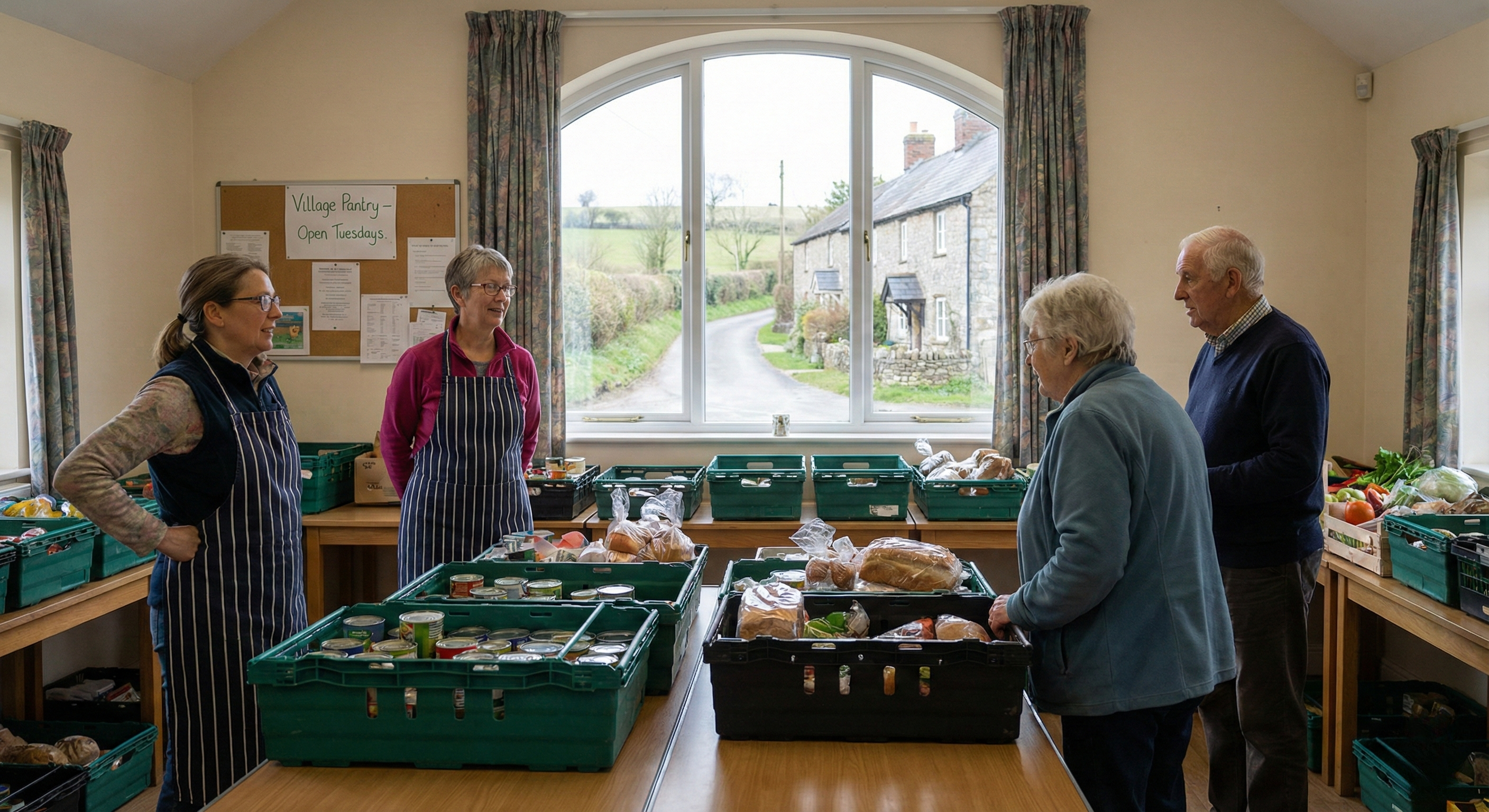
- Small, volunteer-led food banks serving several scattered villages
- Community pantries or pop-up markets in village halls
- Mobile projects bringing food to isolated homes or hamlets
- Shared meals in churches, pubs or community centres
Feed & Flow aims to:
- Provide funding that recognises the extra cost of transport and logistics
- Support projects that cover large areas with small teams
- Help with basic running costs that are hard to fund locally, such as fuel, cold storage or rental of shared spaces
Instead of expecting people to travel long distances to fixed services, the foundation is interested in backing projects that bring food support closer to where people actually live.
Working with small organisations, not just big names
In many rural and coastal areas, the most important food projects are:
- Tiny charities
- Informal community groups
- Faith-based initiatives
- Volunteer networks without large back offices
They may not have professional fundraising teams or polished websites, but they have:
- Deep local knowledge
- Strong trust within the community
- A clear view of who is struggling and why
Feed & Flow intends to design its funding processes with these groups in mind by:
- Keeping applications as simple as possible
- Offering clear guidance and support where needed
- Valuing local knowledge and lived experience alongside paperwork
The aim is to strengthen what already exists, not to force small groups into complex systems that drain their time and energy.
Transport as part of food support, not an afterthought
In rural and coastal settings, food support is often inseparable from transport. That might mean:
- Volunteers using cars or vans to collect and deliver food
- Mobile units visiting estates, villages or isolated homes
- Shared arrangements with other local services such as community transport schemes
Feed & Flow expects to support projects with:
- Fuel and vehicle costs where they are essential to reaching people
- Practical equipment such as portable chillers, insulated containers or storage solutions
- Coordinating partnerships that reduce duplication and wasted journeys
Food that never reaches the people who need it is not support. Logistics matter.
How Freee Water fits into rural and coastal support
Over time, as Freee Water CIC grows and begins to donate surplus to Feed & Flow, rural and coastal communities will also benefit.
Potential long-term links include:
- Food projects in hot months being able to offer both food and hydration
- Events and outreach combining free water and food support in smaller towns
- Shared understanding that both hunger and dehydration are happening beyond city centres
The combined model recognises that basic needs do not stop at the edge of a city map.
A national mission, local realities
Feed & Flow Foundation is being created to support food projects across the UK. That means:
- Recognising that “food desert” can describe a village as much as a city estate
- Funding models that make sense for scattered communities and seasonal economies
- Listening carefully to the people and groups who already hold rural and coastal communities together
Food insecurity outside big cities may be less visible, but it is no less real. Feed & Flow wants to ensure rural and coastal projects are not an afterthought, but a central part of the response.