
Eating Alone Changes What People Eat: The Isolation Side of Food Insecurity
// NO DESCRIPTION DATA
Food insecurity
Food insecurity is often discussed as a budgeting problem.
Sometimes it is. But food is also social. That matters more than people think.
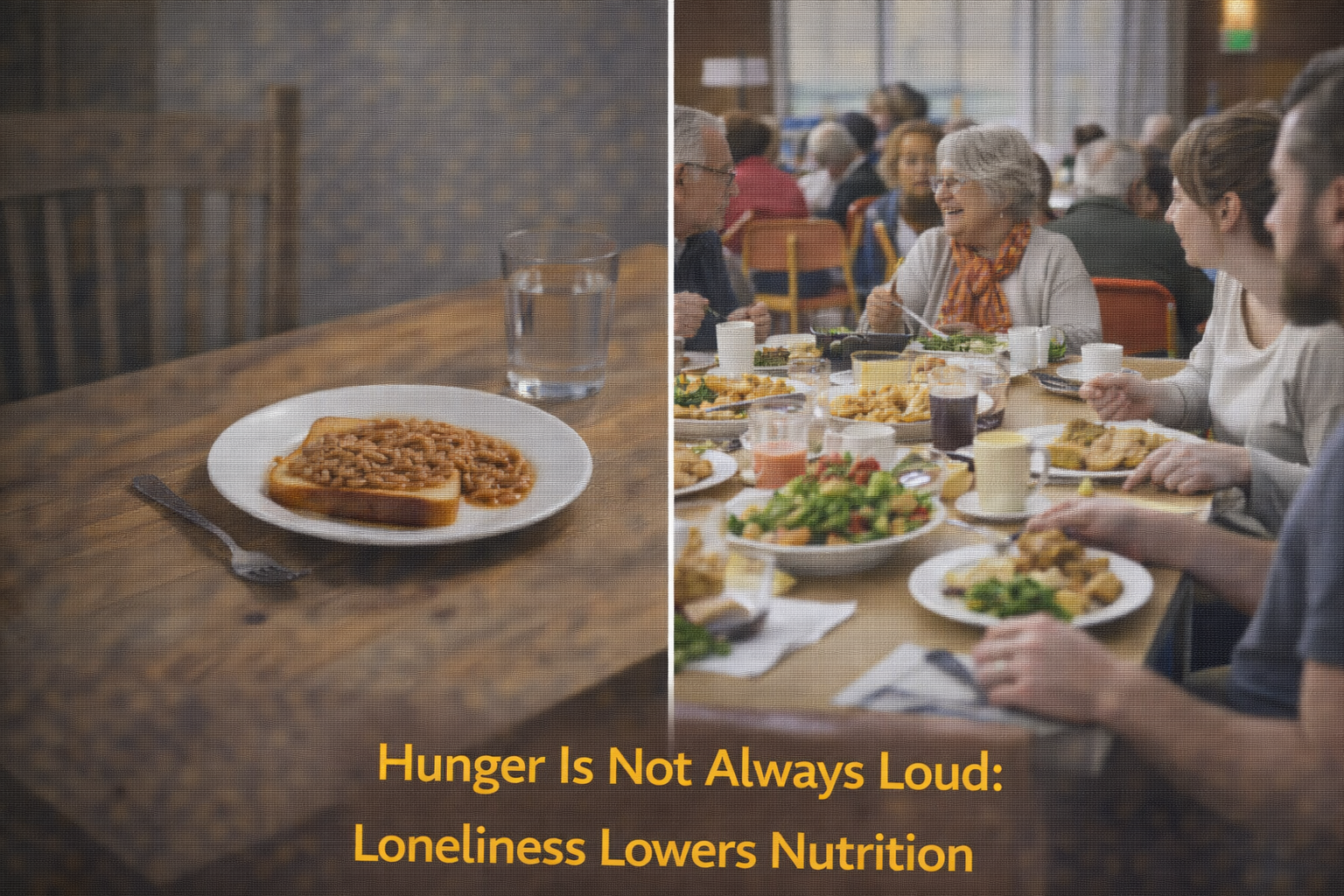
When people eat alone for long periods, meals can get smaller, less regular and less nourishing. Motivation drops. Cooking stops feeling worth the effort. Appetite changes. Shopping becomes more sporadic. Food goes off. Routine disappears. Over time, isolation can quietly pull nutrition down even before a person would describe themselves as “hungry.”
Hunger Is Not Always Loud
A lot of food hardship hides behind ordinary-looking routines.
An older adult may stop cooking proper meals after bereavement. A carer may eat whatever is quickest between responsibilities. Someone living alone may skip meals not because there is no food at all, but because there is no rhythm, no company and no energy to prepare something decent.
From the outside, this can be easy to miss. There may be no dramatic emergency. Just a slow drift towards less variety, less confidence and less nourishment.
That still matters. Malnutrition and food insecurity do not always begin with an empty fridge. Sometimes they begin with disconnection.
Shared Food Has Value Beyond Calories
This is why community meals, lunch clubs and social food spaces matter.
They are not just about handing over calories. They rebuild routine. They reduce isolation. They make food feel normal again. They give people a reason to sit down, eat properly and talk to someone. For many people, that social structure is part of what helps food support actually work.
The UK often treats loneliness and hunger as separate issues. In real life, they overlap all the time. A person who is isolated may struggle to shop, cook, ask for help or even notice their own nutrition slipping until it becomes serious.
Dignity Means Creating Reasons to Come In
There is another important point here. Many people will not access food support if it feels clinical, exposing or purely crisis-based. But they may come to a warm, welcoming, community-based space where food is part of something bigger.
That is not cosmetic. It is practical.
People are more likely to engage when support feels normal, relational and respectful. A meal shared in good company can be the first step into wider help, not because someone was forced to disclose everything, but because they felt safe enough to show up.
Feed & Flow Should Keep the Human Side in View
Feed & Flow is not only about food moving from one place to another. It is about what food support feels like.
That includes recognising that loneliness can shrink diets, routines and resilience long before anyone uses the word hunger. Good support understands that meals are social as well as nutritional.
Because sometimes the difference between coping and not coping is not just what is on the plate.
It is whether someone has a reason to sit down and eat it.