
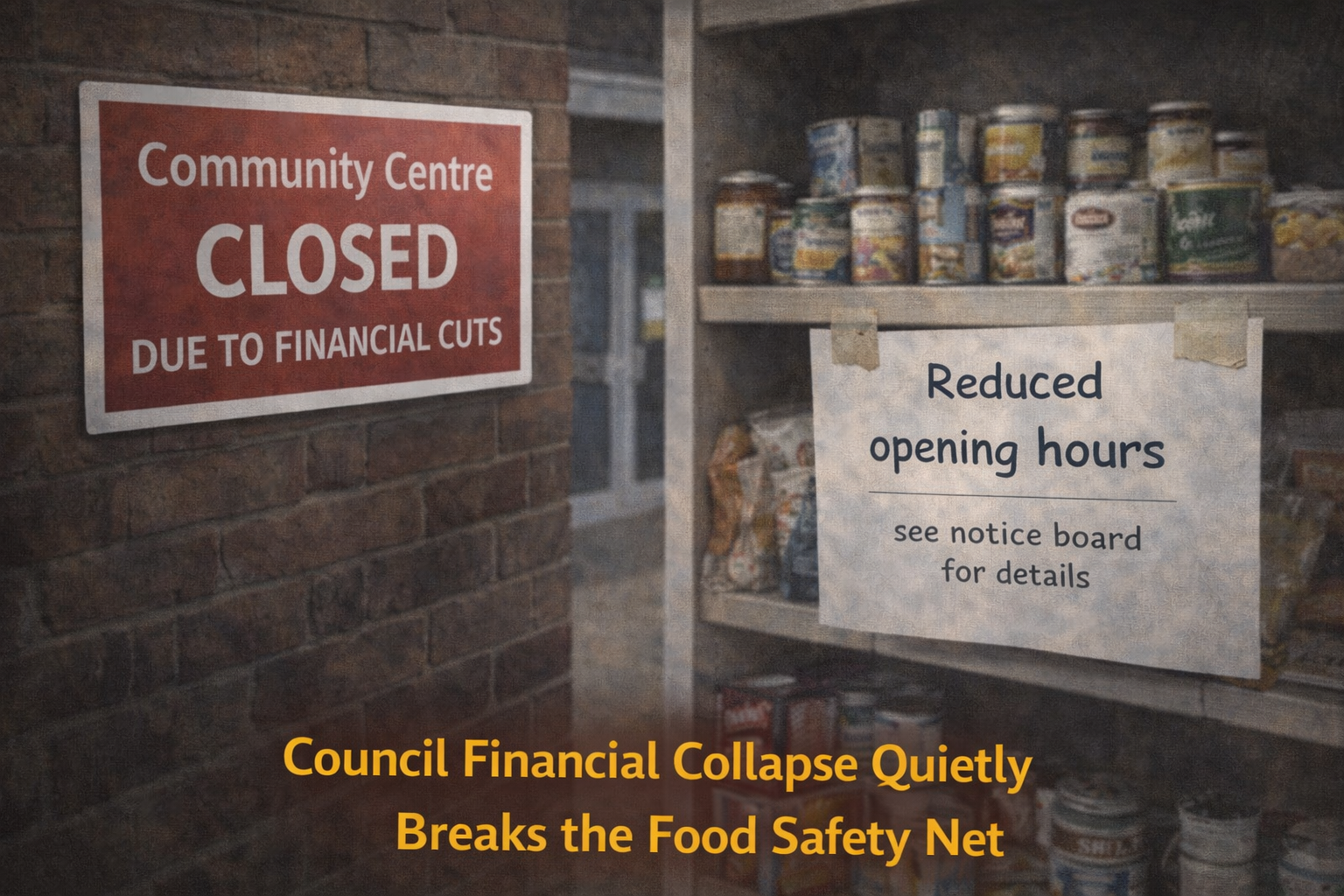
Council Financial Collapse Quietly Breaks the Food Safety Net
// NO DESCRIPTION DATA
Hunger
People think hunger is mainly a household problem. Then local services collapse, and suddenly every weak point becomes sharper.
What a section 114 moment actually does
When councils issue a section 114 notice, it blocks new spending and forces rapid changes to bring budgets back into line. Parliament has described the impacts as significant for services, often requiring spending cuts, asset sales, or increased charges.
So even if a service is not “food,” it might be the thing preventing hunger.
Why this hits food security indirectly but hard
Cuts often land on the exact places that quietly hold communities together:
- community centres
- advice hubs
- family support services
- youth provision
- libraries and warm spaces
When these weaken, people lose access to the help that prevents crisis.
Financial pressure has been escalating across local government
Analysts have tracked a rise in the use of section 114 notices in recent years and the wider strain across council services.
This is not a one-town issue. It is a structural pressure.
Where Feed & Flow fits
Feed & Flow is structured to reinforce frontline organisations directly, and publicly document grants and overheads via its transparency model.
That matters in a world where public budgets cannot reliably hold the line.
When councils are forced into emergency finance mode, the “support network” becomes patchier. Patchy support is how you get quiet hunger that never shows up in headlines until it explodes.