
The Contactless Hunger Trap: When You Have Money but Your Card Doesn’t Work
// NO DESCRIPTION DATA
Cashless Society
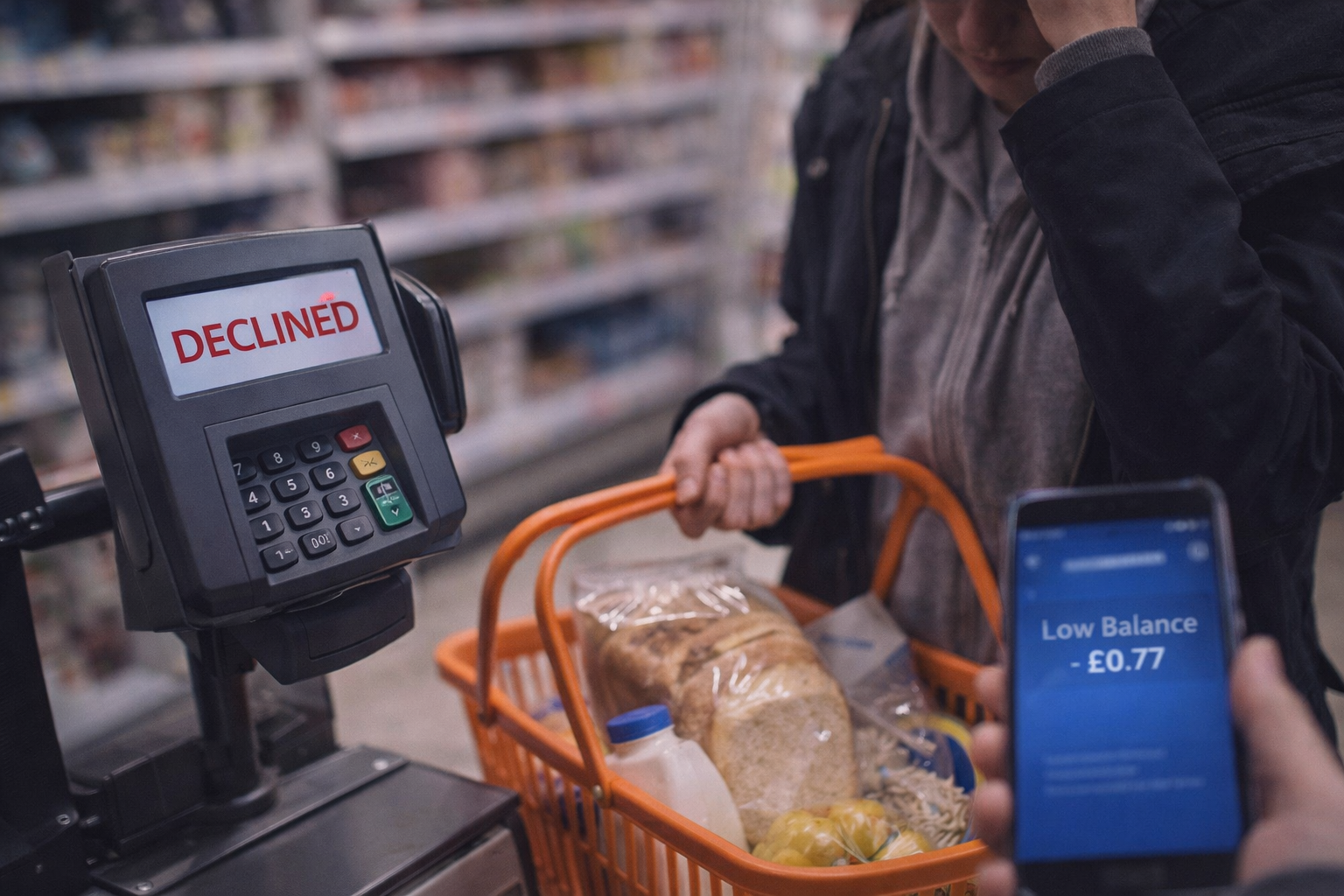
In a cashless society, food access can fail even when the household technically has money.
A card gets declined. A banking app crashes. A prepaid card doesn’t work in certain shops. A temporary block triggers fraud checks. A transfer is “pending.” Suddenly, a person can’t buy food at the exact moment they need it.
This creates a hunger trap that isn’t about budgeting. It’s about systems.
Payment Failure Happens More Than People Admit
When you’re stable, a declined card is annoying. You try another one.
When you’re living close to zero, it’s catastrophic. There is no backup. No second card. No spare cash. No buffer.
People abandon shopping baskets. They walk out embarrassed. They skip meals until the issue resolves.
It Hits Hardest in the Worst Places
Payment failures become worse in:
- small shops that don’t accept certain cards
- online systems with strict verification
- places where you can’t easily try again
- households reliant on one account or prepaid products
This is one reason “cashless convenience” can quietly punish the poorest.
Shame Turns a Glitch Into Silence
Many people won’t ask for help after this happens. They feel humiliated. They don’t want to tell friends. They don’t want to explain it at a food support point. So they go hungry quietly for a day or two, hoping it sorts itself out.
That is hidden hunger by payment system.
What Feed & Flow Can Do
Feed & Flow can treat payment failures as a real crisis trigger: short-term food stabilisation, low-stigma access, and connecting people to support that reduces repeated shocks.
Because hunger doesn’t only come from not having money.
Sometimes it comes from not being able to use it.