
Childcare Fees vs the Food Shop: How Working Parents Become “Skipping Meals” Households
// NO DESCRIPTION DATA
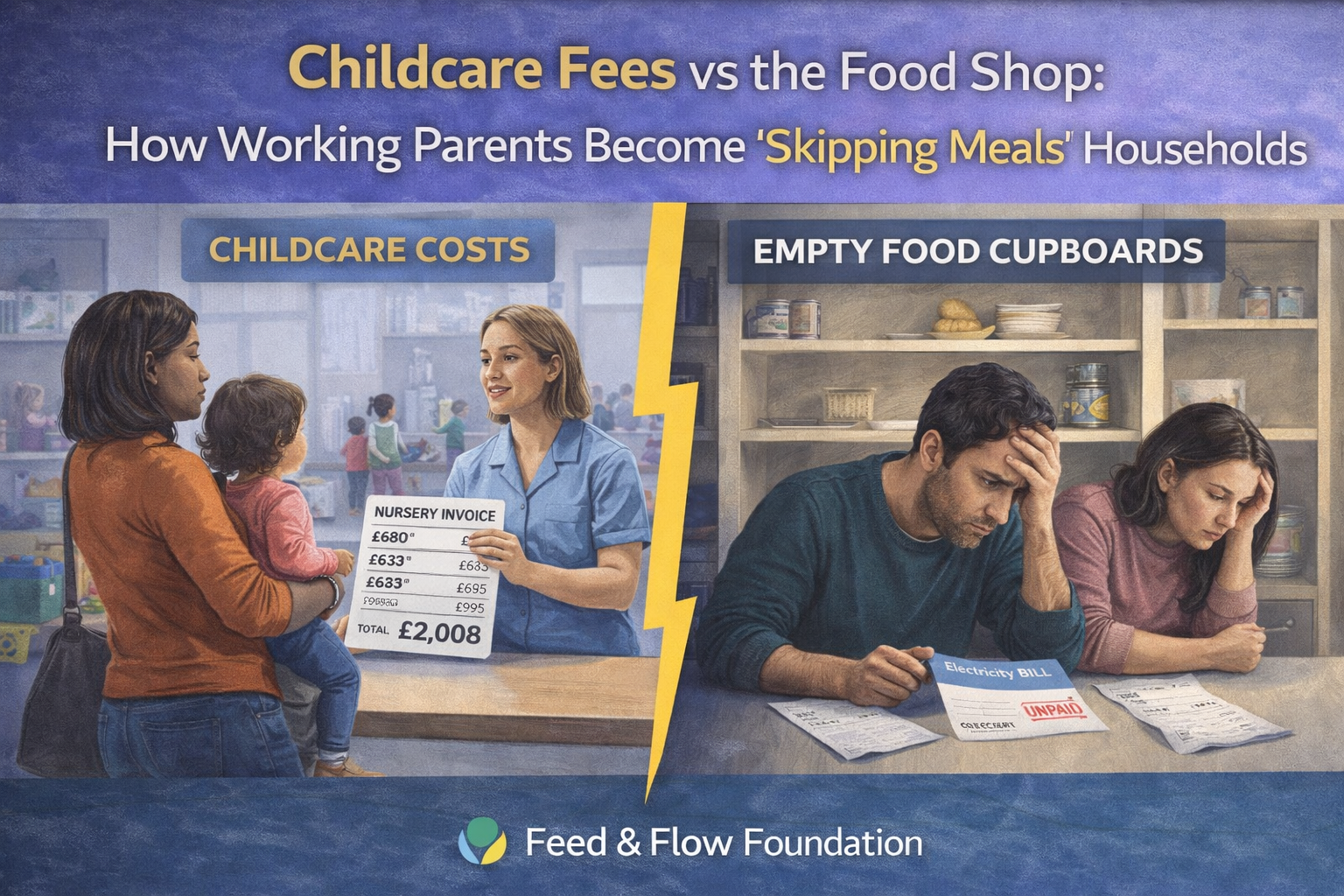
Childcare is a fixed cost that eats the budget first
Food is flexible in a way childcare is not.
You can reduce portions, skip meals, buy cheaper brands, stretch leftovers.
You cannot easily reduce nursery fees when you need to work to pay rent.
So families quietly cut the only thing they can cut: food quality and food quantity.
The UK childcare pressure is structural, not personal failure
Coram’s annual childcare survey regularly shows how expensive childcare is, and how costs remain a major pressure point for families even with policy support.
This matters because it creates a very specific pattern:
- parent works
- childcare cost lands
- rent and bills take priority
- food becomes the adjustable line item
- hunger shows up in a “working household”, often invisibly
Why this creates “hidden hunger” in parents
Parents often shield children first. That means:
- adults skipping meals
- parents eating less so kids can eat normally
- reliance on cheap “filling” food to get through the week
This is why food insecurity is not always visible as empty cupboards. It can be visible as exhaustion, stress, poor health, and constant anxiety around money.
The childcare-food squeeze also damages stability
When parents are constantly balancing childcare and food:
- missed meals affect work performance
- stress rises
- debt becomes more likely
- any disruption (illness, reduced shifts, late payments) can tip the household into crisis
What Feed & Flow funds in this reality
Feed & Flow looks for interventions that actually match working family life:
- cash-first support when budgets collapse
- support for wraparound provision through schools and community partners
- grants that help local projects provide choice-based food support, not one-size parcels
- links between food help and advice services (benefits, housing, debt), because food is rarely the first problem
Food support that ignores childcare pressure will keep missing some of the most common UK hunger stories.