
Childcare Costs Create Hunger Before Work Even Starts
// NO DESCRIPTION DATA
The upfront cost is the real barrier
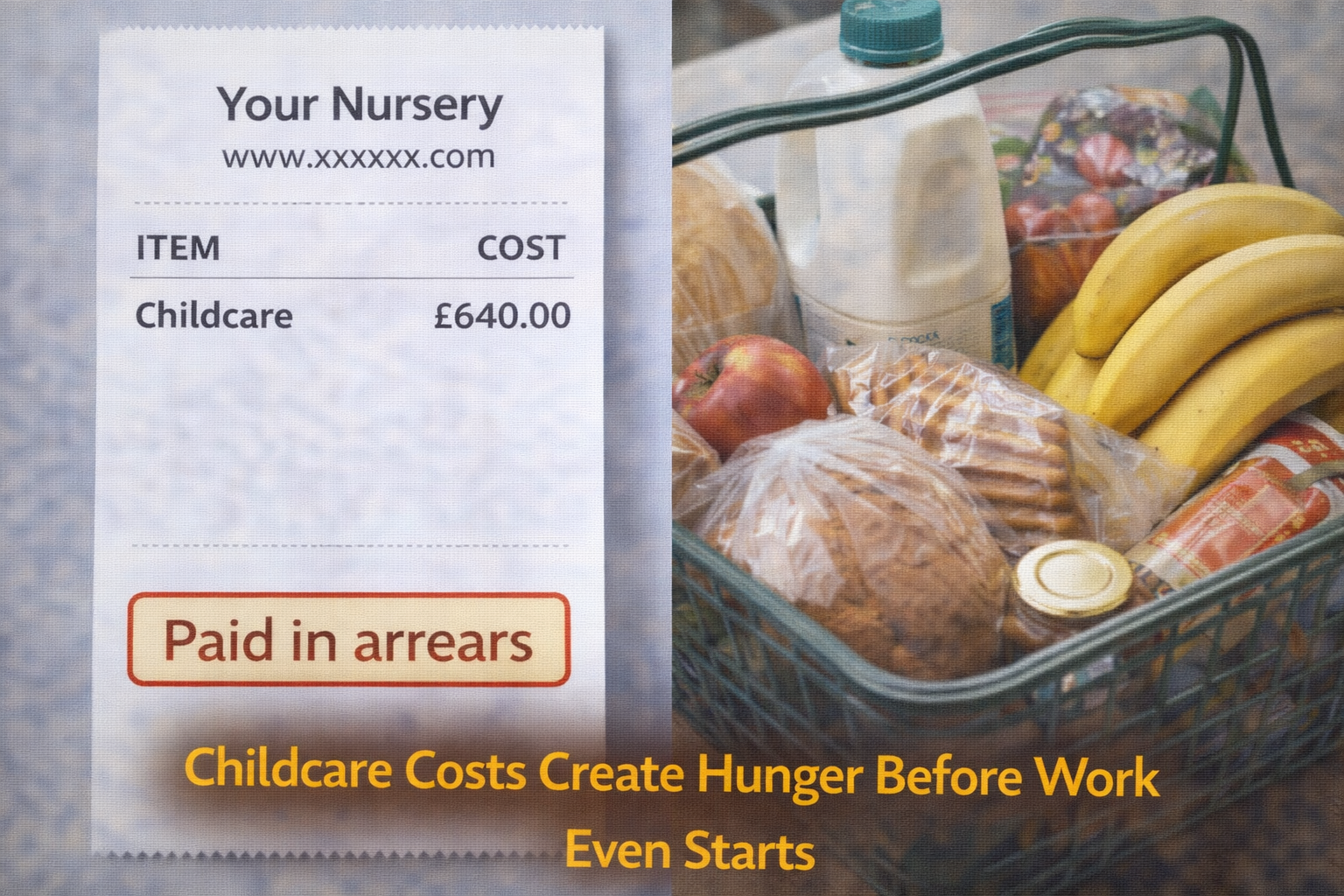
For many parents, the biggest barrier to work is not motivation. It’s cashflow. Childcare often has to be paid upfront, and for families on tight budgets that means the money comes from somewhere else, usually the food shop.
Universal Credit childcare support still creates a cashflow pinch
Universal Credit can cover a portion of childcare costs, but the system has historically required parents to pay first and claim back later. Parliamentary scrutiny has highlighted how paying childcare in arrears can create an “insurmountable barrier” for some households.
That is not just a work issue. It becomes a hunger issue, because the “bridge” money comes out of essentials.
Policy tweaks help, but don’t erase the problem
The government has announced changes aimed at making childcare support easier to access, including measures framed around paying support upfront when people move into work or increase hours, plus raising caps.
Even with improvements, families can still face gaps: deposits, timing mismatches, evidence requirements, and the sheer stress of juggling bills while waiting for reimbursements.
What this looks like on the ground
Research on families receiving Universal Credit shows how unclear rules and admin complexity can leave parents stuck in “grey areas”, making it harder to plan, budget, and stay stable.
When budgets are already fragile, instability doesn’t just cause inconvenience. It causes skipped meals.
What Feed & Flow can do with this reality
Feed & Flow’s model (supporting food banks, breakfast clubs, and community kitchens) fits this problem because childcare-related hunger often hits at predictable pressure points: the start of a job, the first month of childcare, and any disruption that forces parents to re-submit evidence or re-budget.
Practical funding priorities could include:
- Short-term flexible food support during childcare transitions
- Breakfast club funding where mornings are the highest-pressure moment
- Partnerships with local advice networks so families understand what they can claim and when
No grand promises. Just designing support around how the system actually behaves.