
The Car Breakdown Hunger Shock: When One Repair Eats the Food Shop
// NO DESCRIPTION DATA
Food insecurity
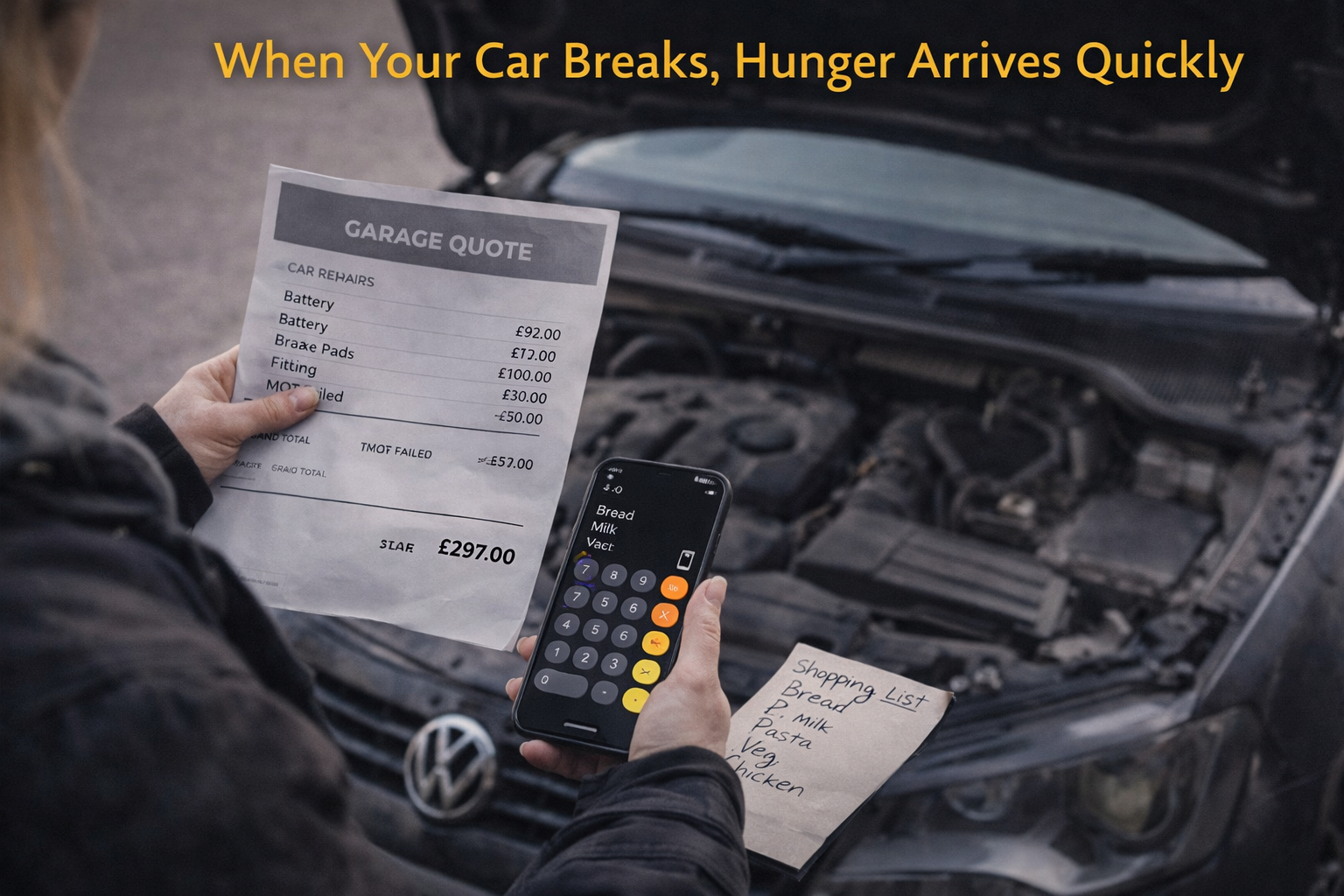
Food insecurity isn’t always a slow decline. Sometimes it arrives like a punch to the face: the car breaks.
For a lot of working households, the car is not a luxury. It’s the bridge between work, school, childcare, shops, and appointments. When it fails, the household doesn’t just lose transport. It loses time, income, and access, all at once.
The Repair Bill Hits Before the Household Can Adjust
Car repairs rarely arrive with warning. It’s a flat battery, a tyre, a clutch, brakes, a surprise MOT failure. Even “small” repairs can wipe out the week’s food budget instantly.
If the household has low savings, the repair becomes a forced trade-off. Pay to keep life functioning, or buy food. People do both by doing the only thing left: cutting meals.
The Hidden Part: When the Car Is Also a Food Access Tool
In many areas, especially outside city centres, the cheapest food options are not walkable. Families rely on a car to reach larger supermarkets, discount retailers, and bulk buys. Without it, shopping shifts to local small shops with higher unit prices and smaller packs.
This creates a double hit:
- less money left after the repair
- higher food prices during the period without the car
That’s how a mechanical problem turns into hunger.
Why This Pushes People Into Debt Fast
Many households pay for repairs with short-term borrowing: overdrafts, pay-later, high-interest credit, family loans. That keeps the car moving, but it turns the following weeks into repayment weeks, which means food stays squeezed.
The shock becomes a cycle: repair bill, debt, deductions from the next budget, and repeated “end of week hunger.”
What Feed & Flow Can Do Differently
Food support often responds after a household is already deep in crisis. Transport shocks are a predictable trigger, especially in working households. The smarter approach is to treat car breakdowns like a known risk point.
Support that stabilises the food side during the repair period can prevent the spiral: fewer skipped meals, less reliance on ultra-cheap calories, and less damage to children’s routine.
Hunger isn’t always caused by “bad spending.” Sometimes it’s caused by one unavoidable bill keeping the whole household running.