
Beyond Food Parcels: Why Feed & Flow Helps Cover The Hidden Costs Of Food Support
// NO DESCRIPTION DATA
Donating
When people think about donating to food support, they often picture tins, fresh produce and cooked meals. Those are the visible parts of the work.
Behind every food parcel or community meal, there is an entire layer of “hidden” costs that keep the service running: rent, insurance, fridges, fuel, volunteer training, basic admin and more.
Without that infrastructure, the food never reaches the plate.
Feed & Flow Foundation recognises that reality. We are not only interested in funding the last step of handing food over. We also want to help cover the less visible costs that make food support safe, dignified and sustainable.
1. Why core costs are so hard to fund
Many funders prefer to pay for items that feel tangible, such as:
- X number of meals
- Y number of food parcels
- A specific piece of equipment
Those are important, but they sit on top of ongoing expenses that rarely make it into a headline. Food projects often struggle to cover:
- Rent or contribution to shared space
- Utilities for kitchens, fridges and freezers
- Food safety training and checks
- Accounting, reporting and compliance
- Volunteer coordination and support
Without these, there is no safe place to store food, no legal framework, no reliable schedule and no way to plan for growth.
Feed & Flow believes that supporting core costs is not an optional extra. It is part of taking food insecurity seriously.
2. The risk of burnout and instability
When funding is only available for parcels or short-term “projects”, staff and volunteers end up:
- Chasing multiple small pots of money
- Spending more time on applications than on delivery
- Operating on constant short-term uncertainty
This leads to burnout, high turnover and, in some cases, closure of vital services.
By helping to cover core costs where appropriate, Feed & Flow wants to give local food projects more breathing room to:
- Plan ahead
- Retain experienced staff
- Invest in better systems
- Focus on the people they support
3. Examples of hidden costs that matter
Depending on local context, Feed & Flow funding might help cover things like:
- A contribution to rent for a shared community kitchen space
- Servicing and repairing fridges, freezers or ovens
- Fuel or vehicle costs for regular food deliveries
- Simple digital tools to manage referrals, stock and volunteers
- Insurance and basic governance costs
None of these items are exciting on their own. Together, they make the difference between a project that survives a winter and one that does not.
4. Transparency and trust
Covering core costs requires strong trust between funder and project. Feed & Flow will:
- Ask for clear budgets and explanations of what is needed
- Look for basic financial controls and governance
- Agree reporting that is proportionate, not overwhelming
- Share summaries of how funds are used so donors and communities can see the picture
The aim is not to micromanage, but to support good practice and give reassurance that money is being used wisely.
5. Linking infrastructure to impact
Supporting hidden costs is only justified if it leads to real benefits for people facing food insecurity. When assessing applications that include core costs, Feed & Flow will ask:
- How will this spending help more people access food, or access it more reliably?
- Will it improve safety, dignity or choice?
- Does it strengthen the long term resilience of the project?
For example:
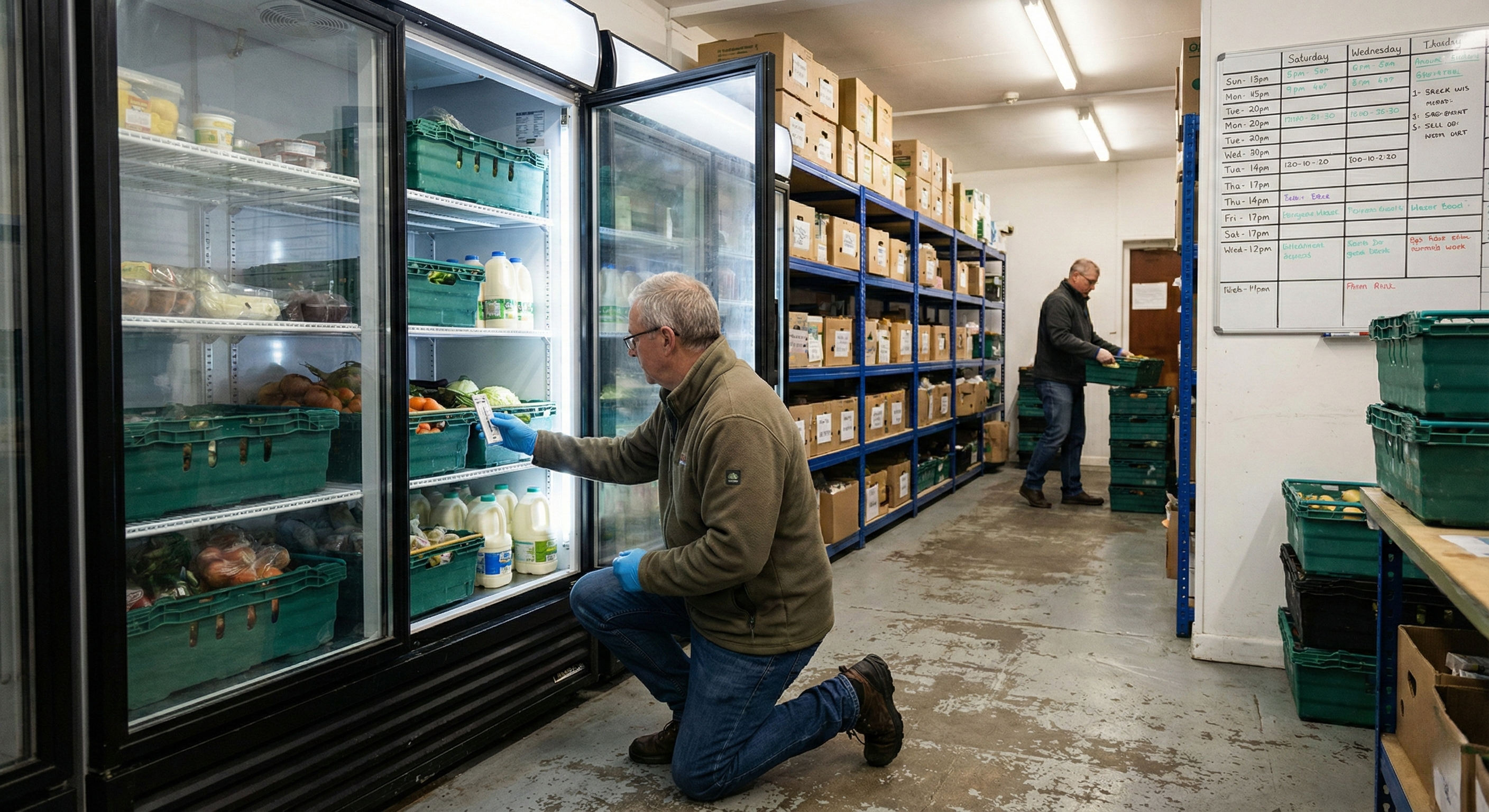
- Funding a walk-in fridge may allow a food bank to accept more fresh donations and reduce waste.
- Covering part of a coordinator’s salary might extend opening hours or improve support for volunteers.
- Contributing to rent for a shared space could allow several small projects to collaborate under one roof.
In each case, the infrastructure is a means to an end: better food support for people under pressure.
6. How this connects to Freee Water
As Freee Water CIC grows and begins to share surplus with Feed & Flow, that income can help build exactly this kind of stability. A predictable contribution from a social enterprise partner makes it easier to:
- Offer multi-year support instead of one-off grants
- Back core costs with confidence
- Help projects plan beyond the next funding cycle
The goal is an ecosystem where food projects are not constantly fighting for survival, but are able to focus on improving what they do best.
7. A more honest conversation about what food support requires
Talking openly about hidden costs is part of treating food support as serious work, not just emergency charity.
Feed & Flow Foundation is committed to funding not only the food that people can see, but also the structures and systems that make sure it is there when they need it.
Parcels and meals matter. So do the fridges, lights, staff time and rent that allow those parcels and meals to exist in the first place.
We want supporters, partners and communities to know that when they back Feed & Flow, they are helping to cover the full reality of what it takes to keep people fed.