
The Allergy Lunch Tax: When Safe Food Costs More and Kids Still Need to Eat
// NO DESCRIPTION DATA
Food insecurity
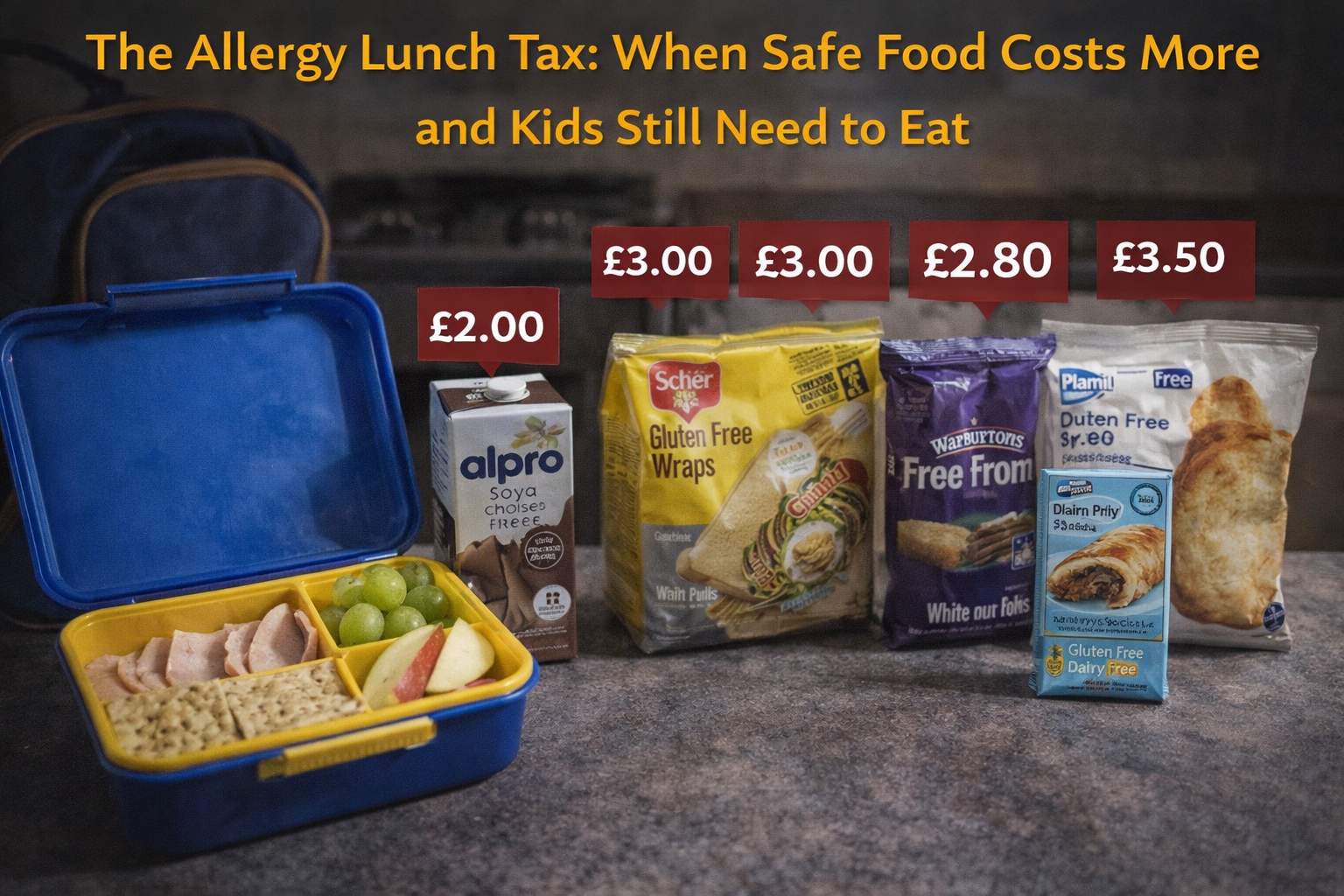
Food insecurity gets more complicated when a child has allergies or food intolerances. “Just buy cheaper” stops working when safe options cost more, come in smaller packs, and aren’t available everywhere.
For many families, allergy-safe food becomes a hidden tax layered on top of an already stretched budget.
Safe Options Often Cost More
Free-from products can be significantly pricier than standard equivalents. Some families can’t buy in bulk because brands vary, availability is inconsistent, and trying something new carries risk. When money is tight, the choice becomes brutal: pay more for safety or compromise on variety and nutrition.
Schools Add Constraints Too
Packed lunches must fit school rules and allergy policies. Some children can’t use standard school meal options. Others need careful planning to avoid cross-contamination or accidental triggers. That makes lunch a daily stress point, not a simple routine.
Poverty and Allergy Management Collide
When budgets are fragile, families may ration safe products, avoid fresh items that risk waste, or default to repetitive meals that feel “safe enough.” Over time, that reduces dietary variety and increases stress and social difference for the child.
This is hunger by constraint, not just by shortage.
Feed & Flow Can Recognise Allergy Costs as Real Hardship
Support systems often treat special diets as edge cases. They’re not. Many families are managing allergies while also managing rent, debt, childcare, and rising food costs. Dignity-first food support should include the reality of safety needs, not assume one parcel fits all.
When a child’s food has to be safe, families need support that doesn’t punish them for a medical reality.